Blog

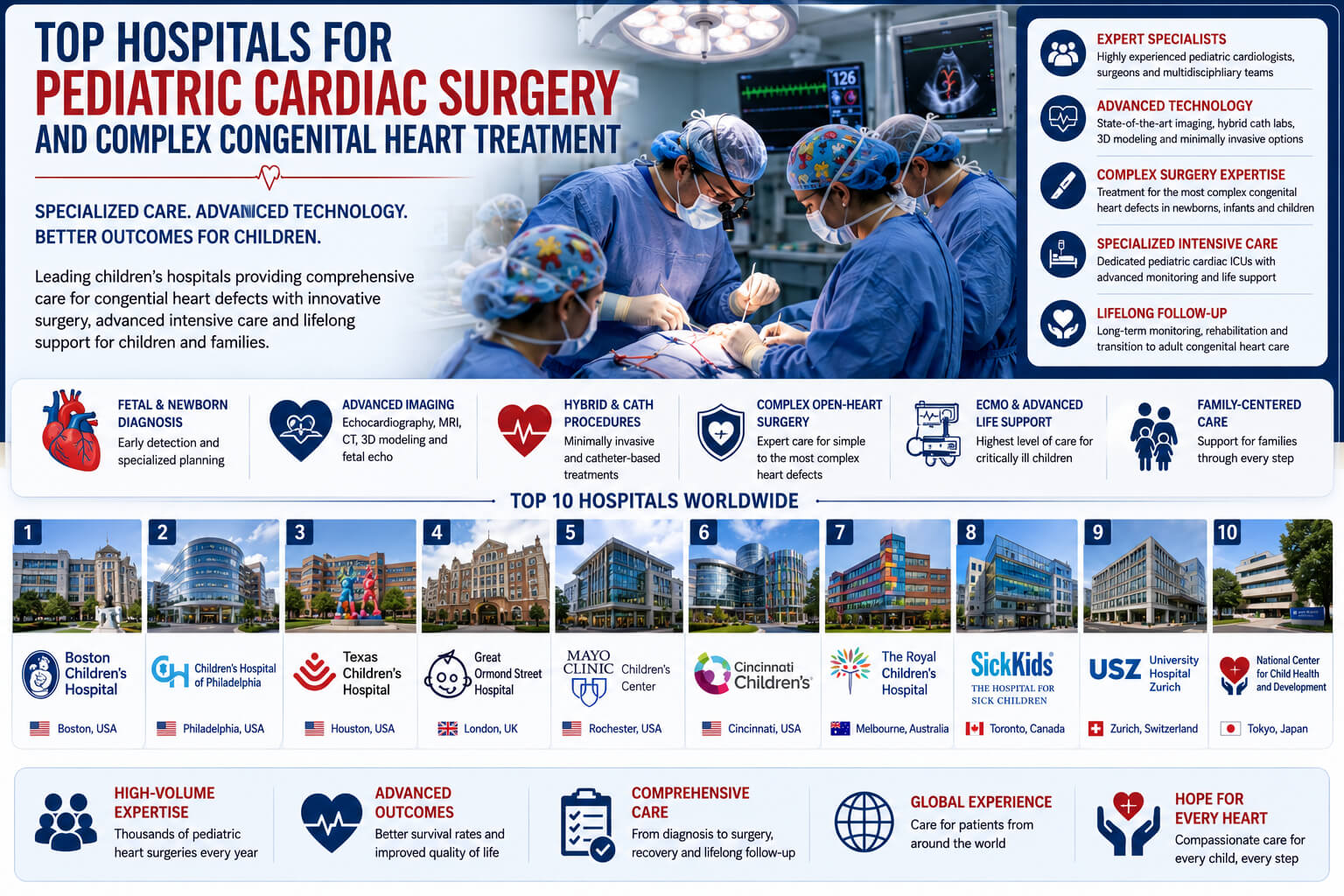
  • Top Hospitals for Pediatric Cardiac Surgery and Complex Congenital Heart Treatment

    Top Hospitals for Pediatric Cardiac Surgery and Complex Congenital Heart Treatment

    Pediatric cardiac surgery and congenital heart treatment represent some of the most specialized areas of modern medicine. Children born with heart defects may require highly individualized care from infancy through adolescence and, in some cases, into adulthood. Because a child’s heart and circulatory system are still developing, diagnosis and treatment require expertise that differs significantly from adult cardiovascular care.

    Congenital heart defects can range from relatively simple structural abnormalities to highly complex conditions involving multiple chambers, valves, and major blood vessels. Some children require monitoring, while others may need catheter-based intervention, open-heart surgery, staged reconstruction, or long-term follow-up.

    Modern pediatric cardiac programs bring together pediatric cardiologists, congenital heart surgeons, cardiac anesthesiologists, intensivists, imaging specialists, genetic experts, and rehabilitation professionals. Advanced hospitals also provide specialized neonatal and pediatric intensive care units designed to support critically ill infants and children before and after complex procedures.

    Advances in fetal imaging, three-dimensional cardiac visualization, minimally invasive catheter procedures, extracorporeal life support, and surgical reconstruction have significantly expanded treatment possibilities for children with complex congenital heart disease.

    Leading hospitals for pediatric cardiac care typically combine high-volume surgical expertise with dedicated children’s facilities, advanced cardiac imaging, hybrid catheterization laboratories, specialized intensive care, and long-term developmental support.

    This article explores major hospitals worldwide known for pediatric cardiac surgery and advanced treatment of complex congenital heart conditions.

    What Makes a Hospital a Leader in Pediatric Cardiac Treatment?

    Complex congenital heart disease requires highly coordinated care from specialists who understand the unique physiology of infants and children.

    The strongest programs combine surgical expertise with advanced diagnostics and long-term follow-up.

    Specialized Pediatric Heart Teams

    A comprehensive pediatric cardiac program may include:

    • Pediatric cardiologists
    • Congenital heart surgeons
    • Pediatric cardiac anesthesiologists
    • Cardiac intensivists
    • Interventional cardiologists
    • Neonatal specialists
    • Pediatric imaging experts

    This multidisciplinary structure is particularly important for newborns and children with complex heart conditions.

    Advanced Pediatric Cardiac Imaging

    Detailed imaging is essential for understanding congenital heart anatomy.

    Leading hospitals may use:

    • Fetal echocardiography
    • Pediatric echocardiography
    • Cardiac MRI
    • CT angiography
    • Three-dimensional cardiac modeling

    These technologies help specialists visualize complex structures and plan individualized treatment.

    Dedicated Pediatric Cardiac Intensive Care

    Children undergoing major heart surgery require specialized postoperative monitoring.

    Dedicated pediatric cardiac intensive care units can provide support for:

    • Breathing and ventilation
    • Circulation
    • Heart rhythm monitoring
    • Infection prevention
    • Nutritional management

    The availability of highly specialized intensive care is an important component of complex pediatric cardiac programs.

    1. Boston Children’s Hospital – Boston, United States

    Boston Children’s Hospital is internationally recognized for specialized pediatric medicine and congenital heart treatment.

    Complex heart conditions often require detailed evaluation before a treatment plan is developed.

    Specialized teams may evaluate:

    • Heart anatomy
    • Blood flow patterns
    • Cardiac function
    • Associated medical conditions
    • Previous interventions

    Large pediatric cardiac programs can coordinate surgical treatment, catheter-based procedures, intensive care, and long-term follow-up.

    Research also plays an important role in advancing treatment for rare and complex congenital heart disorders.

    2. Children’s Hospital of Philadelphia – Philadelphia, United States

    Children’s Hospital of Philadelphia provides specialized care for children with complex medical conditions, including congenital heart disease.

    Pediatric cardiac treatment may involve multiple stages depending on the type and severity of the condition.

    Advanced programs can combine:

    • Cardiac surgery
    • Interventional cardiology
    • Advanced imaging
    • Intensive care
    • Developmental support

    Careful coordination is particularly important when infants require treatment shortly after birth.

    3. Texas Children’s Hospital – Houston, United States

    Texas Children’s Hospital provides advanced pediatric cardiac care and complex surgical treatment.

    Some congenital heart conditions can be identified before birth.

    Fetal cardiology programs allow specialists to evaluate certain cardiac abnormalities during pregnancy and prepare for specialized care after delivery.

    Early diagnosis can help families and medical teams plan appropriate treatment.

    4. Great Ormond Street Hospital – London, United Kingdom

    Great Ormond Street Hospital is internationally known for specialized pediatric healthcare.

    Children with complex congenital heart conditions may require care from multidisciplinary teams.

    Advanced pediatric hospitals can provide highly individualized treatment strategies based on the child’s anatomy, age, growth, and overall health.

    Long-term follow-up is important because some children require continued cardiac monitoring as they develop.

    5. Mayo Clinic Children’s Center – Rochester, United States

    Mayo Clinic Children’s Center provides multidisciplinary care for children with complex medical and surgical conditions.

    Pediatric cardiac surgery requires extensive planning.

    Specialists may evaluate cardiac anatomy alongside other factors such as:

    • Lung development
    • Neurological health
    • Genetic conditions
    • Overall physical development

    A comprehensive medical environment can help manage children with multiple health concerns.

    6. Cincinnati Children’s Hospital Medical Center – Cincinnati, United States

    Cincinnati Children’s Hospital Medical Center provides specialized treatment for complex pediatric conditions.

    Congenital heart disease can affect children in very different ways.

    Some patients require a single intervention, while others may need multiple procedures over several years.

    Specialized cardiac programs can coordinate care throughout different stages of childhood.

    7. Royal Children’s Hospital – Melbourne, Australia

    The Royal Children’s Hospital provides advanced pediatric care and specialized cardiac treatment.

    Children with complex heart conditions may require access to multiple services within a dedicated children’s hospital.

    Treatment can involve collaboration between cardiac surgeons, cardiologists, anesthesiologists, intensive care specialists, and rehabilitation teams.

    8. SickKids – Toronto, Canada

    The Hospital for Sick Children, commonly known as SickKids, is a major pediatric academic medical center.

    Advanced pediatric cardiac programs often combine clinical care with research into congenital heart disease.

    Research areas may include:

    • Cardiac genetics
    • Advanced imaging
    • Surgical techniques
    • Long-term outcomes

    Academic pediatric hospitals contribute to the development of new approaches for managing rare and complex conditions.

    9. University Hospital Zurich – Zurich, Switzerland

    University Hospital Zurich provides specialized cardiovascular and pediatric medical services.

    Complex congenital heart treatment can require detailed planning across several specialties.

    Advanced cardiac imaging can help specialists understand unusual anatomical structures before intervention.

    Patients with highly complex conditions may benefit from multidisciplinary consultation.

    10. National Center for Child Health and Development – Tokyo, Japan

    The National Center for Child Health and Development provides specialized pediatric healthcare and research.

    Dedicated children’s medical centers play an important role in managing rare and complex congenital conditions.

    Pediatric cardiac treatment may involve long-term coordination between medical specialists and families.

    Understanding Congenital Heart Disease

    Congenital heart disease refers to structural abnormalities of the heart that are present at birth.

    These conditions can affect:

    • Heart chambers
    • Heart valves
    • Major blood vessels
    • Blood flow pathways

    The severity of congenital heart disease varies significantly.

    Some conditions may require observation, while others need intervention shortly after birth.

    Common Types of Congenital Heart Defects

    There are many forms of congenital heart disease.

    Examples can include:

    • Ventricular septal defects
    • Atrial septal defects
    • Tetralogy of Fallot
    • Transposition of the great arteries
    • Hypoplastic left heart syndrome
    • Coarctation of the aorta

    Each condition has different anatomical characteristics and treatment considerations.

    Fetal Cardiology and Prenatal Diagnosis

    Advances in prenatal imaging allow some heart abnormalities to be identified before birth.

    Fetal echocardiography can provide detailed information about the developing heart.

    Early diagnosis may help families prepare for specialized delivery planning and immediate neonatal care.

    In complex cases, pediatric cardiac specialists may coordinate with obstetric and neonatal teams before the child is born.

    Pediatric Cardiac Catheterization

    Not every congenital heart condition requires traditional open-heart surgery.

    Some children may be candidates for catheter-based procedures.

    Interventional techniques can be used in selected cases to:

    • Open narrowed blood vessels
    • Repair selected structural abnormalities
    • Place specialized devices
    • Evaluate cardiac pressures

    The suitability of catheter treatment depends on the specific heart condition and the child’s anatomy.

    Complex Open-Heart Surgery for Children

    Open-heart surgery remains essential for many complex congenital heart conditions.

    During these procedures, surgeons may repair abnormal structures, reconstruct blood flow pathways, or correct defects involving multiple areas of the heart.

    Some operations require the use of a heart-lung machine to temporarily support circulation and oxygenation.

    The type of surgery depends on the child’s specific anatomy and clinical condition.

    Complex congenital heart surgery may include:

    • Septal defect repair
    • Valve reconstruction
    • Arterial switch procedures
    • Aortic arch reconstruction
    • Single-ventricle palliation
    • Complex intracardiac reconstruction

    Some children require a single corrective procedure, while others need staged operations performed at different stages of growth.

    Hybrid Pediatric Cardiac Procedures

    Hybrid treatment combines surgical and catheter-based techniques.

    These procedures can be particularly useful for selected newborns and infants with complex heart anatomy.

    A hybrid approach allows specialists from surgery and interventional cardiology to work together during treatment.

    The use of hybrid facilities can reduce the need for multiple separate procedures in carefully selected cases.

    Treatment decisions are individualized based on the child’s anatomy, age, size, and overall condition.

    Neonatal Cardiac Surgery

    Some congenital heart defects require treatment shortly after birth.

    Neonatal cardiac surgery is particularly demanding because newborns have small and rapidly developing cardiovascular systems.

    Specialized neonatal programs require close coordination between:

    • Pediatric cardiac surgeons
    • Neonatologists
    • Pediatric cardiologists
    • Cardiac anesthesiologists
    • Intensive care specialists

    Preoperative stabilization and detailed surgical planning are essential.

    Extracorporeal Life Support and ECMO

    Children with severe cardiac or respiratory failure may require temporary advanced life support.

    Extracorporeal membrane oxygenation, commonly known as ECMO, can provide temporary support for circulation and oxygenation in selected critically ill patients.

    ECMO is used in highly specialized intensive care environments.

    It requires continuous monitoring by trained multidisciplinary teams.

    Not every critically ill child is a candidate for ECMO, and its use depends on the underlying condition and clinical circumstances.

    Advanced Pediatric Cardiac Imaging and 3D Modeling

    Complex congenital heart anatomy can be difficult to visualize using conventional imaging alone.

    Advanced centers may use three-dimensional imaging and computer-based modeling to improve understanding of complex structures.

    These technologies can assist specialists with:

    • Surgical planning
    • Visualization of abnormal anatomy
    • Device selection
    • Patient-specific treatment strategies

    Three-dimensional models may be especially valuable in highly complex congenital heart conditions.

    Recovery After Pediatric Heart Surgery

    Recovery depends on the complexity of the procedure and the child’s overall health.

    Following major cardiac surgery, children may require monitoring in a specialized intensive care unit.

    Medical teams monitor:

    • Heart function
    • Blood pressure
    • Oxygen levels
    • Breathing
    • Heart rhythm
    • Fluid balance

    The duration of hospitalization varies considerably.

    Some children recover relatively quickly, while others require extended intensive care and rehabilitation.

    Pediatric Cardiac Rehabilitation

    Recovery can involve more than surgical healing.

    Some children may benefit from specialized rehabilitation and developmental support.

    Programs can include:

    • Physical therapy
    • Occupational therapy
    • Nutritional support
    • Developmental assessment
    • Psychological support

    The needs of each child depend on their medical history and stage of development.

    Long-Term Follow-Up for Congenital Heart Disease

    Congenital heart disease often requires lifelong medical monitoring.

    Even after successful childhood surgery, some patients may need continued follow-up as they grow.

    Long-term monitoring may evaluate:

    • Heart function
    • Valve performance
    • Blood flow
    • Heart rhythm
    • Physical development

    Some patients may require additional interventions later in life.

    The transition from pediatric to adult congenital heart care is an important part of long-term management.

    Potential Risks and Complications

    Complex pediatric cardiac surgery involves significant potential risks.

    Possible complications may include:

    • Bleeding
    • Infection
    • Heart rhythm abnormalities
    • Breathing difficulties
    • Neurological complications
    • Kidney problems

    Individual risks vary significantly based on the child’s diagnosis, age, overall health, and complexity of the procedure.

    Families should discuss expected benefits and potential risks directly with the treating medical team.

    The Importance of Family-Centered Care

    Pediatric treatment affects both the child and their family.

    Leading children’s hospitals often provide family-centered support services.

    These may include:

    • Parent education
    • Psychological support
    • Social services
    • Accommodation assistance
    • Care coordination

    Clear communication between families and medical teams is especially important when children require multiple procedures or long-term treatment.

    How International Families Can Choose a Pediatric Cardiac Hospital

    Families considering treatment abroad should carefully evaluate the capabilities of specialized children’s hospitals.

    Important considerations include:

    Experience With Complex Congenital Conditions

    Families may want to evaluate whether the hospital has dedicated programs for rare or highly complex heart defects.

    Specialized Pediatric Intensive Care

    Access to dedicated pediatric and neonatal cardiac intensive care can be critical following major surgery.

    Multidisciplinary Cardiac Teams

    Coordination between surgeons, cardiologists, anesthesiologists, and intensive care specialists supports comprehensive treatment planning.

    International Patient Support

    Families should confirm services related to medical record review, appointment coordination, translation, accommodation guidance, and follow-up planning.

    Cost Factors in Pediatric Cardiac Treatment

    The cost of congenital heart treatment can vary significantly depending on the complexity of the condition.

    Potential expenses may include:

    • Specialist consultations
    • Advanced imaging
    • Cardiac catheterization
    • Open-heart surgery
    • Intensive care
    • ECMO support when required
    • Hospitalization
    • Rehabilitation
    • Long-term follow-up

    Highly complex neonatal procedures and extended intensive care can substantially increase overall treatment costs.

    Families should request detailed financial information directly from the treating institution.

    Future Developments in Pediatric Cardiac Surgery

    Research continues to improve the treatment of congenital heart disease.

    Personalized 3D Surgical Planning

    Advanced imaging and patient-specific models may help surgeons plan highly complex reconstructions.

    Tissue Engineering

    Scientists are researching biological materials that may eventually support the development of living heart valves and vascular structures.

    Advanced Catheter-Based Treatments

    New devices are expanding minimally invasive treatment options for selected congenital heart conditions.

    Artificial Intelligence

    AI is being explored for imaging analysis, surgical planning, and risk assessment.

    Improved Long-Term Care

    Research increasingly focuses not only on survival but also on long-term neurological development, quality of life, and adult outcomes.

    Frequently Asked Questions

    What is congenital heart disease?

    Congenital heart disease refers to structural abnormalities of the heart that are present at birth.

    Do all congenital heart defects require surgery?

    No. Some conditions can be monitored or treated with medication or catheter-based procedures, depending on the specific defect.

    What is pediatric cardiac surgery?

    Pediatric cardiac surgery involves surgical treatment of heart conditions affecting infants, children, and adolescents.

    Can congenital heart disease be detected before birth?

    Some heart abnormalities can be identified during pregnancy through specialized fetal cardiac imaging.

    How long do children stay in the hospital after heart surgery?

    Hospital stays vary depending on the complexity of surgery and the child’s recovery.

    Do children need long-term follow-up after congenital heart surgery?

    Many patients require continued cardiac monitoring because heart function and repaired structures can change as the child grows.
  • Best Hospitals Worldwide for Advanced Brain Tumor Treatment and Neuro-Oncology

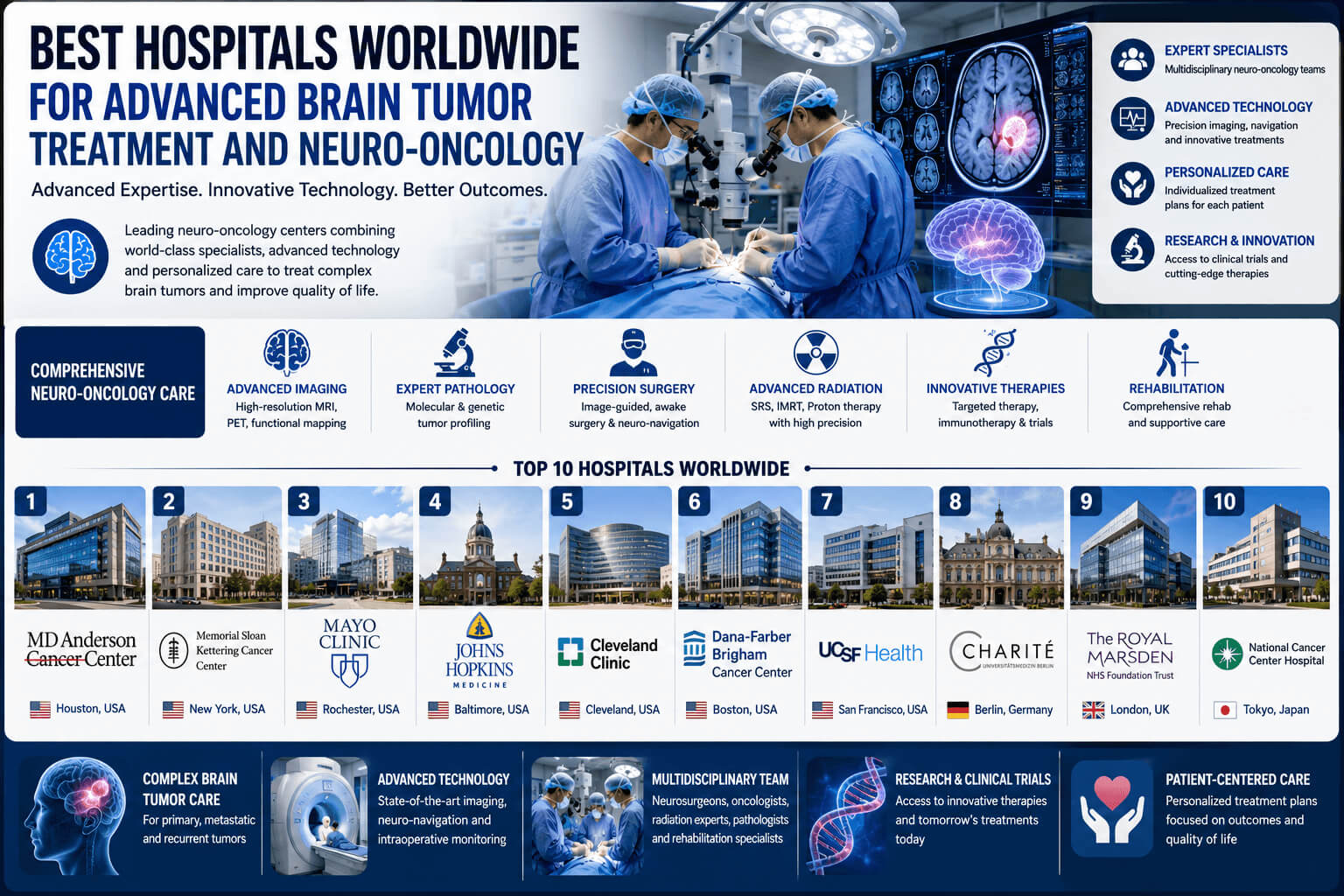
    Best Hospitals Worldwide for Advanced Brain Tumor Treatment and Neuro-Oncology

    Brain tumors represent one of the most complex areas of modern cancer treatment. The brain controls essential functions involving movement, memory, speech, vision, sensation, and behavior, making the diagnosis and treatment of tumors particularly challenging. Even a small lesion can affect critical neurological structures depending on its location.

    Advanced neuro-oncology combines expertise from neurosurgery, medical oncology, radiation oncology, neuroradiology, neuropathology, molecular medicine, and rehabilitation. Treatment decisions often require highly individualized planning based on tumor type, location, grade, molecular characteristics, and the patient’s overall neurological condition.

    Modern advances have transformed the way many brain tumors are diagnosed and treated. High-resolution MRI, functional brain mapping, image-guided surgery, intraoperative monitoring, stereotactic radiation, targeted therapies, and molecular testing have created new possibilities for selected patients.

    Leading hospitals for brain tumor treatment typically provide dedicated neuro-oncology programs where specialists from multiple disciplines collaborate to evaluate complex cases. These centers may also participate in clinical research involving new surgical technologies, precision medicine, immunotherapy, and experimental treatments.

    This article explores major hospitals worldwide known for advanced brain tumor treatment, complex neurosurgery, and specialized neuro-oncology care.

    What Makes a Hospital a Leader in Brain Tumor Treatment?

    Brain tumor treatment requires a level of precision that goes beyond many conventional surgical procedures.

    The strongest neuro-oncology programs combine advanced technology with highly specialized multidisciplinary expertise.

    Dedicated Neuro-Oncology Teams

    Complex brain tumors may require care from:

    • Neurosurgeons
    • Neuro-oncologists
    • Radiation oncologists
    • Neuroradiologists
    • Neuropathologists
    • Neurologists
    • Rehabilitation specialists

    Multidisciplinary collaboration helps ensure that different treatment options are evaluated before a major clinical decision is made.

    Advanced Brain Imaging

    Detailed imaging is essential for understanding a tumor’s location and relationship to critical brain structures.

    Leading centers may use:

    • High-resolution MRI
    • Functional MRI
    • Diffusion imaging
    • PET imaging in selected cases
    • Advanced neuro-navigation systems

    These technologies help specialists plan surgery and other treatments with greater anatomical precision.

    Molecular and Genetic Testing

    Modern brain tumor treatment increasingly depends on molecular analysis.

    Tumor tissue may be examined for genetic and biological characteristics that can influence diagnosis and treatment planning.

    Advanced pathology laboratories can help classify tumors more precisely and identify potential treatment options for selected patients.

    1. MD Anderson Cancer Center – Houston, United States

    MD Anderson Cancer Center is internationally recognized for comprehensive cancer treatment and research.

    Its neuro-oncology programs manage patients with a broad range of primary and complex brain tumors.

    Patients may undergo detailed diagnostic evaluation involving advanced imaging, pathology, and multidisciplinary consultation.

    Treatment planning may include surgery, radiation therapy, systemic treatment, or a combination of approaches depending on the diagnosis.

    Research programs may also provide eligible patients with access to clinical trials investigating new therapies.

    2. Memorial Sloan Kettering Cancer Center – New York, United States

    Memorial Sloan Kettering Cancer Center is a major institution specializing in complex cancer treatment.

    Brain tumor care can involve highly individualized planning because tumors differ significantly in biological behavior and location.

    Specialists may evaluate:

    • Tumor type
    • Tumor grade
    • Molecular characteristics
    • Location
    • Previous treatment history
    • Neurological function

    Comprehensive cancer centers can coordinate surgical and non-surgical treatment within dedicated neuro-oncology programs.

    3. Mayo Clinic – Rochester, United States

    Mayo Clinic provides multidisciplinary care for complex neurological and oncological conditions.

    Patients with difficult brain tumors may require evaluation by specialists from several medical departments.

    Advanced neurosurgical planning can include detailed imaging and functional assessment.

    Treatment strategies are designed around both tumor control and preservation of neurological function when possible.

    Comprehensive medical facilities can also provide rehabilitation and long-term follow-up after complex treatment.

    4. Johns Hopkins Hospital – Baltimore, United States

    Johns Hopkins Hospital is a major academic medical center with extensive expertise in neurology, neurosurgery, and cancer research.

    Academic institutions contribute to research involving brain tumor biology, surgical innovation, and precision medicine.

    Complex tumors located near critical neurological structures may require specialized planning.

    Advanced surgical programs can use technologies such as image guidance and neurological monitoring to support precision during selected procedures.

    5. Cleveland Clinic – Cleveland, United States

    Cleveland Clinic provides specialized care for complex neurological and oncological conditions.

    Brain tumor patients may require detailed pre-treatment assessment.

    Specialists can evaluate imaging, neurological symptoms, and pathology findings before recommending a treatment pathway.

    Large multidisciplinary centers can coordinate neurosurgery, radiation therapy, medical oncology, and rehabilitation services.

    6. Dana-Farber Brigham Cancer Center – Boston, United States

    Dana-Farber Brigham Cancer Center provides advanced cancer treatment and research.

    Modern neuro-oncology increasingly focuses on understanding the biological characteristics of individual tumors.

    Molecular diagnostics can provide important information about tumor classification and potential treatment strategies.

    Research continues to explore new approaches involving targeted treatment, immunotherapy, and novel drug delivery methods.

    7. UCSF Medical Center – San Francisco, United States

    UCSF Medical Center is associated with specialized neurological care and advanced neurosurgical programs.

    Complex brain tumor treatment requires detailed coordination between diagnostic and surgical teams.

    Patients may undergo sophisticated imaging and functional assessment before surgery.

    Academic centers also investigate new methods for improving tumor visualization and preserving neurological function.

    8. Charité – Universitätsmedizin Berlin, Germany

    Charité is one of Europe’s major academic medical institutions.

    Its multidisciplinary medical environment supports treatment for complex neurological diseases and cancers.

    Advanced neuro-oncology care can involve collaboration between neurosurgery, oncology, neuroradiology, pathology, and rehabilitation specialists.

    Large academic centers also contribute to research involving new diagnostic technologies and treatment approaches.

    9. The Royal Marsden – London, United Kingdom

    The Royal Marsden specializes in cancer diagnosis and treatment.

    Patients with complex tumors may benefit from access to specialized oncology teams and advanced radiation services.

    Brain tumor treatment can require careful coordination between surgical and radiation specialists.

    Treatment recommendations depend on the specific characteristics of the tumor and the patient’s overall medical condition.

    10. National Cancer Center Hospital – Tokyo, Japan

    The National Cancer Center Hospital is a major institution focused on specialized cancer care and research.

    Advanced cancer centers in Japan contribute to research involving precision medicine, advanced imaging, and innovative treatment technologies.

    Brain tumor patients may require individualized evaluation because treatment approaches can vary significantly between tumor types.

    Understanding Brain Tumors

    Brain tumors develop when abnormal cells grow within or around the brain.

    They can vary considerably in their behavior.

    Some tumors are slow-growing, while others may grow more aggressively.

    Brain tumors can be classified broadly as:

    • Primary brain tumors
    • Secondary or metastatic brain tumors

    Primary tumors originate within the brain or surrounding structures.

    Metastatic tumors develop when cancer from another part of the body spreads to the brain.

    Treatment approaches can differ substantially between these conditions.

    Advanced Diagnosis and Tumor Classification

    Accurate diagnosis is essential before treatment begins.

    Modern brain tumor classification increasingly combines microscopic examination with molecular information.

    Diagnostic evaluation may include:

    • Neurological examination
    • MRI imaging
    • Advanced functional imaging
    • Biopsy
    • Molecular testing
    • Genetic analysis in selected cases

    Detailed classification helps specialists understand tumor behavior and develop an individualized treatment strategy.

    Functional Brain Mapping

    Some tumors develop near areas responsible for critical functions such as movement, speech, and memory.

    Functional mapping can help specialists identify important regions of the brain before or during selected surgical procedures.

    Techniques may include:

    • Functional MRI
    • Intraoperative mapping
    • Neurological monitoring

    These approaches can support surgical planning when preservation of neurological function is a major concern.

    Advanced Neurosurgery for Brain Tumors

    Surgery may be recommended for selected brain tumors.

    The objective may include obtaining tissue for diagnosis, reducing tumor size, relieving pressure, or removing as much tumor as safely possible.

    Modern neurosurgery may use:

    • Image-guided navigation
    • Intraoperative imaging
    • Microsurgical techniques
    • Neuromonitoring
    • Fluorescence-guided visualization

    The appropriate surgical strategy depends on tumor location and the relationship to important neurological structures.

    Awake Brain Surgery

    Awake brain surgery may be considered for selected patients when a tumor is located near areas responsible for important functions such as speech or movement.

    During carefully planned procedures, specialists can assess neurological function while performing portions of the surgery.

    This approach may help surgeons identify critical functional areas and reduce the risk of damage to important brain functions.

    Awake procedures are not necessary or appropriate for every patient. The decision depends on tumor location, patient condition, and the planned surgical approach.

    Stereotactic Radiosurgery

    Stereotactic radiosurgery is a highly precise form of radiation treatment used for selected brain tumors and other neurological conditions.

    Despite its name, it does not involve traditional surgical removal.

    Advanced imaging and treatment planning are used to direct focused radiation toward a specific target.

    Potential applications may include selected cases involving:

    • Small brain tumors
    • Metastatic brain lesions
    • Tumor remnants
    • Recurrent tumors

    The suitability of stereotactic radiosurgery depends on factors such as tumor size, location, and type.

    Proton Therapy

    Proton therapy is an advanced form of radiation treatment available at specialized centers.

    Unlike conventional radiation, proton beams have different physical properties that may allow radiation specialists to limit exposure beyond the targeted area in selected situations.

    This can be particularly relevant when tumors are located close to sensitive structures.

    However, proton therapy is not automatically the best option for every brain tumor.

    Specialists evaluate whether it offers a meaningful advantage based on the individual treatment plan.

    Chemotherapy for Brain Tumors

    Chemotherapy may be used as part of treatment for certain brain tumors.

    The effectiveness of systemic treatment can vary depending on the tumor’s biological characteristics.

    One challenge in neuro-oncology is the blood-brain barrier, which can limit how certain medicines reach brain tissue.

    Researchers continue to investigate improved drug delivery systems and new treatment combinations.

    Treatment may be used before or after other interventions depending on the clinical situation.

    Targeted Therapy and Precision Medicine

    Modern cancer research increasingly focuses on the molecular characteristics of tumors.

    Advanced testing can identify genetic or biological changes that may influence treatment selection.

    For selected patients, targeted therapies may be considered when specific tumor characteristics are identified.

    Not every brain tumor has a targetable alteration.

    However, molecular testing has become increasingly important for accurate tumor classification and personalized treatment planning.

    Immunotherapy and Brain Tumor Research

    Immunotherapy is an important area of cancer research.

    Researchers are investigating ways to stimulate or modify immune responses against brain tumors.

    Research areas may include:

    • Immune checkpoint strategies
    • Cancer vaccines
    • Cellular therapies
    • Combination treatments

    The brain tumor environment presents unique scientific challenges.

    Many experimental immunotherapy approaches remain under investigation, and eligibility depends on the specific disease and available clinical trials.

    Tumor Treating Fields and Emerging Technologies

    Some advanced treatment programs use innovative technologies designed to interfere with tumor cell activity.

    Tumor Treating Fields are an example of a technology used in selected situations for specific brain tumor types.

    Treatment suitability depends on diagnosis, regulatory approval, availability, and specialist evaluation.

    Research continues into additional non-invasive and technology-assisted approaches.

    Advanced Drug Delivery Research

    Scientists are investigating new methods to improve how medicines reach brain tumors.

    Potential areas of research include:

    • Local drug delivery
    • Implantable treatment systems
    • Nanotechnology
    • Focused ultrasound
    • Blood-brain barrier modulation

    These technologies aim to address the challenge of delivering effective treatments to tumor tissue while limiting unnecessary exposure.

    Many approaches remain under clinical investigation.

    Recovery After Brain Tumor Surgery

    Recovery varies significantly depending on the location of the tumor and complexity of the procedure.

    Patients may require monitoring for:

    • Neurological changes
    • Seizures
    • Bleeding
    • Brain swelling
    • Infection

    The recovery process can involve intensive medical observation immediately after surgery.

    Some patients may return to daily activities relatively quickly, while others require extended rehabilitation.

    Neurological Rehabilitation

    Brain tumors and their treatments can affect physical and cognitive function.

    Rehabilitation may involve several specialists.

    Programs can include:

    • Physical therapy
    • Occupational therapy
    • Speech therapy
    • Cognitive rehabilitation

    The goal is to help patients regain or adapt functional abilities based on their individual needs.

    Managing Symptoms and Quality of Life

    Supportive care is an important part of comprehensive neuro-oncology treatment.

    Patients may experience symptoms related to the tumor or treatment.

    Supportive services can help manage:

    • Pain
    • Fatigue
    • Seizures
    • Cognitive changes
    • Emotional challenges

    Supportive care can be provided alongside surgery, radiation, or systemic treatment.

    Potential Risks and Complications

    Brain tumor treatment can involve significant risks depending on the tumor and treatment approach.

    Possible complications may include:

    • Neurological deficits
    • Bleeding
    • Infection
    • Seizures
    • Brain swelling
    • Cognitive changes

    The individual risk profile depends heavily on tumor location and the type of treatment.

    Patients should discuss expected benefits and possible complications directly with their specialist team.

    How International Patients Can Choose a Brain Tumor Hospital

    International patients considering treatment abroad should carefully evaluate specialist neuro-oncology programs.

    Important considerations include:

    Specialized Neurosurgical Expertise

    Brain tumor surgery requires experience with complex tumors and advanced neurological techniques.

    Molecular Diagnostics

    Modern tumor classification may depend on sophisticated pathology and molecular testing.

    Advanced Radiation Technology

    Access to stereotactic radiosurgery, advanced radiation planning, or proton therapy may be relevant for selected patients.

    Multidisciplinary Neuro-Oncology Teams

    Coordination between neurosurgery, oncology, radiation specialists, and rehabilitation teams can support comprehensive care.

    International Patient Services

    Patients should confirm whether the hospital provides medical record review, appointment coordination, translation, and follow-up planning.

    Cost Factors in Brain Tumor Treatment

    Treatment costs vary considerably depending on the hospital, country, and treatment complexity.

    Potential expenses may include:

    • Specialist consultations
    • Advanced MRI and imaging
    • Biopsy and molecular testing
    • Neurosurgery
    • Intensive care
    • Radiation therapy
    • Systemic treatment
    • Rehabilitation
    • Long-term monitoring

    Complex surgery and prolonged hospitalization can significantly affect total costs.

    Future Developments in Neuro-Oncology

    Research continues to explore new ways to improve brain tumor treatment.

    Artificial Intelligence

    AI technologies are being investigated for medical imaging analysis, tumor classification, and treatment planning.

    Advanced Molecular Medicine

    Improved understanding of tumor genetics may support more personalized treatment strategies.

    Focused Ultrasound

    Focused ultrasound is being researched for potential applications involving drug delivery and treatment of neurological conditions.

    Personalized Cancer Vaccines

    Scientists are investigating personalized vaccines designed around specific tumor characteristics.

    Improved Surgical Visualization

    New imaging technologies may help surgeons distinguish tumor tissue from healthy brain structures more precisely.

    Frequently Asked Questions

    What is neuro-oncology?

    Neuro-oncology is a specialized medical field focused on cancers and tumors affecting the brain, spinal cord, and nervous system.

    Is surgery required for every brain tumor?

    No. Treatment depends on tumor type, location, size, growth behavior, and the patient’s overall condition.

    What is awake brain surgery?

    Awake brain surgery is a specialized procedure used in selected cases to monitor important neurological functions while portions of surgery are performed.

    Can brain tumors be treated without traditional surgery?

    Some selected tumors may be managed with radiation, systemic therapy, observation, or other approaches depending on their characteristics.

    Why is molecular testing important?

    Molecular testing can provide information about tumor biology that may improve classification and influence treatment planning.

    Can international patients receive brain tumor treatment abroad?

    Many major neuro-oncology centers provide services for international patients, but medical imaging, pathology reports, and previous treatment records are typically reviewed before treatment planning.

  • Top 10 Hospitals for Complex Vascular Surgery and Advanced Aortic Treatment

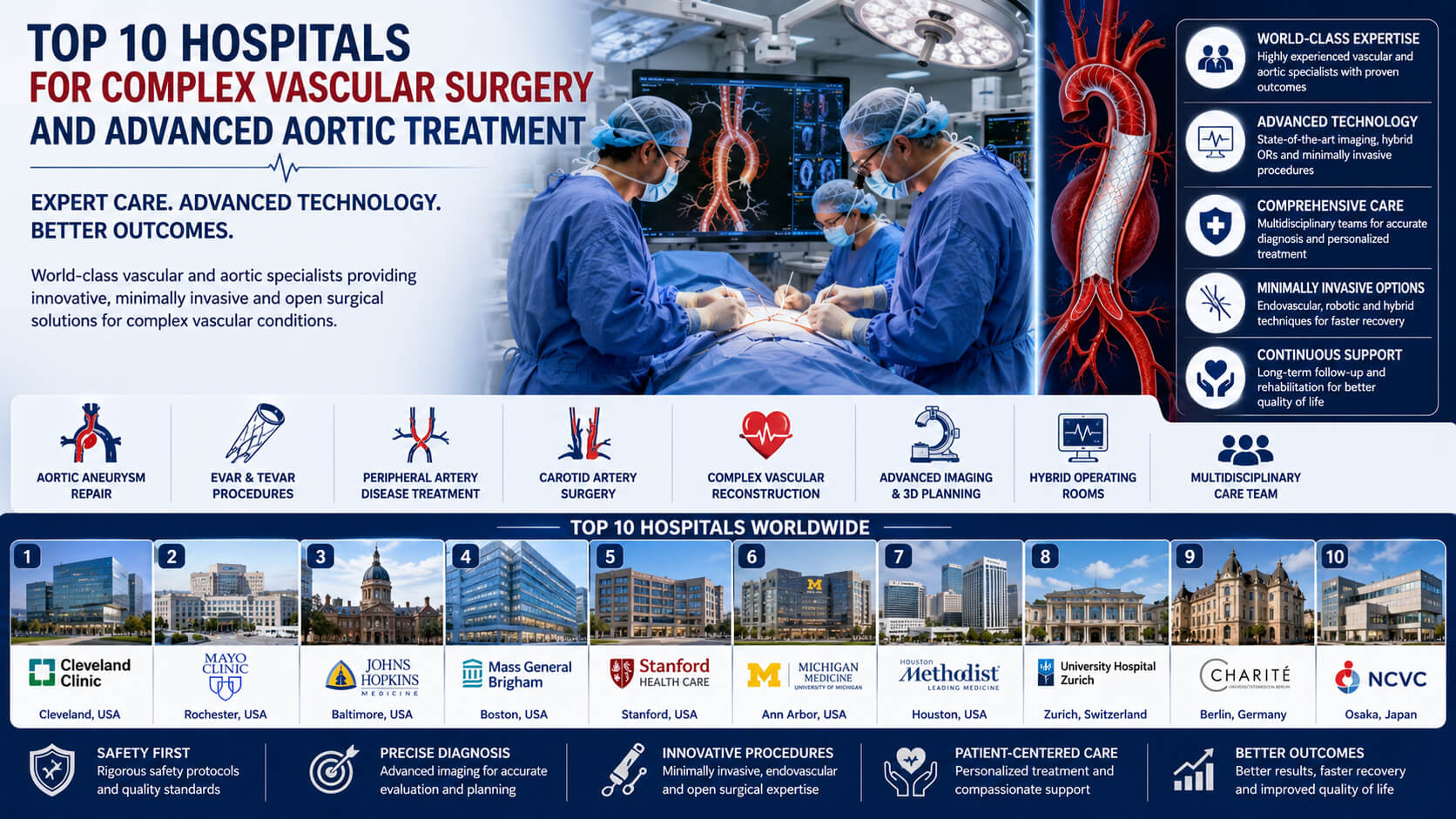
    Top 10 Hospitals for Complex Vascular Surgery and Advanced Aortic Treatment

    Complex vascular surgery and advanced aortic treatment represent some of the most technically demanding areas of modern cardiovascular medicine. Diseases affecting the aorta and major blood vessels can become life-threatening and often require highly specialized evaluation, advanced imaging, minimally invasive intervention, or major open surgery.

    The vascular system carries blood throughout the body, making vascular disorders particularly complex when they involve major arteries, critical organs, or multiple areas of circulation. Aortic aneurysms, aortic dissections, peripheral artery disease, carotid artery disease, and other vascular conditions may require coordinated treatment from multidisciplinary teams.

    Modern vascular medicine has changed significantly with the development of advanced imaging, endovascular procedures, hybrid operating rooms, robotic technologies in selected applications, and improved critical care. Many conditions that previously required extensive open surgery can now be treated through minimally invasive catheter-based approaches in appropriately selected patients.

    However, complex vascular disease still requires individualized treatment planning. The best approach depends on the patient’s anatomy, disease severity, location of the vascular problem, overall health, and potential risks.

    Leading hospitals for vascular and aortic treatment typically combine vascular surgeons, cardiovascular surgeons, interventional radiologists, cardiologists, anesthesiologists, and intensive care specialists within highly coordinated programs.

    This article explores some of the world’s leading hospitals known for complex vascular surgery and advanced aortic treatment.

    What Makes a Hospital a Leader in Complex Vascular Treatment?

    Complex vascular disease requires more than a conventional surgical department.

    Advanced treatment programs need specialized expertise, sophisticated imaging, and the ability to respond rapidly to emergencies.

    Dedicated Aortic and Vascular Teams

    Patients with serious vascular conditions may require care from:

    • Vascular surgeons
    • Cardiovascular surgeons
    • Interventional radiologists
    • Cardiologists
    • Anesthesiologists
    • Critical care specialists
    • Neurologists in selected cases

    This multidisciplinary structure can be particularly important for patients with complex aneurysms or multi-system vascular disease.

    Advanced Vascular Imaging

    Detailed imaging is essential for treatment planning.

    Leading centers may use:

    • CT angiography
    • MR angiography
    • Duplex ultrasound
    • Intravascular imaging
    • Three-dimensional vascular reconstruction

    These technologies help specialists understand blood vessel anatomy and plan individualized procedures.

    Hybrid Operating Rooms

    Hybrid operating rooms combine advanced imaging technology with surgical capabilities.

    This allows specialists to perform complex procedures involving both open surgery and catheter-based techniques in a coordinated environment.

    Hybrid facilities can be particularly valuable for complex aortic repair and other high-risk vascular interventions.

    1. Cleveland Clinic – Cleveland, United States

    Cleveland Clinic is internationally recognized for advanced cardiovascular medicine and complex surgical treatment.

    Its vascular and cardiovascular specialists manage patients with a wide range of arterial and aortic conditions.

    Complex cases may require detailed evaluation involving advanced imaging and multidisciplinary consultation.

    Treatment planning can consider whether a patient may benefit from:

    • Open surgery
    • Endovascular intervention
    • Hybrid procedures
    • Medical monitoring

    The appropriate strategy depends on the patient’s specific anatomy and clinical condition.

    2. Mayo Clinic – Rochester, United States

    Mayo Clinic provides multidisciplinary care for complex cardiovascular and vascular conditions.

    Patients with difficult aortic disease may require coordinated assessment across several specialties.

    Advanced imaging and detailed anatomical analysis can support treatment planning.

    Some complex cases involve previous surgery, extensive aneurysms, or disease affecting multiple segments of the aorta.

    A comprehensive medical environment can support both planned procedures and the management of unexpected complications.

    3. Johns Hopkins Hospital – Baltimore, United States

    Johns Hopkins Hospital is a major academic medical center with expertise in complex cardiovascular treatment.

    Academic institutions contribute to research involving advanced surgical and endovascular approaches.

    Patients with complicated vascular disease may require individualized evaluation based on their anatomy and medical history.

    Complex aortic conditions can sometimes require collaboration between cardiac surgeons, vascular surgeons, and interventional specialists.

    This multidisciplinary approach supports detailed planning for high-risk procedures.

    4. Massachusetts General Hospital – Boston, United States

    Massachusetts General Hospital provides advanced treatment for complex cardiovascular and surgical conditions.

    Patients with major vascular disease may undergo detailed preoperative evaluation.

    This can involve:

    • Cardiovascular assessment
    • Advanced imaging
    • Kidney function testing
    • Neurological evaluation
    • General surgical risk assessment

    Comprehensive planning is particularly important when procedures involve major blood vessels supplying critical organs.

    5. Stanford Health Care – Stanford, United States

    Stanford Health Care provides specialized treatment for complex cardiovascular and vascular diseases.

    Advanced medical centers continue to develop new techniques for treating aortic disorders.

    Some patients may be candidates for advanced endovascular procedures using customized treatment strategies.

    The selection of treatment depends heavily on detailed anatomical imaging.

    Complex cases may require extensive planning before intervention.

    6. University of Michigan Health – Ann Arbor, United States

    University of Michigan Health is a major academic medical center with experience in cardiovascular and vascular treatment.

    Complex vascular disease can involve multiple medical considerations.

    Patients may have additional conditions affecting:

    • Heart function
    • Kidney health
    • Neurological status
    • Respiratory function

    Multidisciplinary teams can evaluate these factors when developing a treatment strategy.

    Academic centers also contribute to ongoing research into new vascular technologies.

    7. Houston Methodist Hospital – Houston, United States

    Houston Methodist provides specialized cardiovascular and vascular services.

    Advanced vascular programs can manage complex arterial conditions through a combination of surgical and minimally invasive approaches.

    Patients may undergo detailed diagnostic evaluation before treatment.

    Specialists assess the location and severity of disease before determining whether intervention is necessary.

    Careful patient selection is essential because not every vascular condition requires immediate surgery.

    8. University Hospital Zurich – Zurich, Switzerland

    University Hospital Zurich is a major European academic medical center with advanced cardiovascular and surgical capabilities.

    Complex aortic treatment requires close coordination between diagnostic and surgical specialists.

    European academic centers continue to contribute to research involving:

    • Endovascular technology
    • Advanced vascular imaging
    • Surgical reconstruction
    • Personalized treatment planning

    Patients with difficult vascular conditions may benefit from access to multiple specialist opinions.

    9. Charité – Universitätsmedizin Berlin, Germany

    Charité is one of Europe’s major academic medical institutions.

    Its multidisciplinary environment supports treatment for complex cardiovascular and surgical diseases.

    Advanced vascular care can involve close collaboration between:

    • Vascular surgery
    • Cardiology
    • Radiology
    • Intensive care
    • Emergency medicine

    This type of integrated structure is particularly important when patients require urgent treatment.

    10. National Cerebral and Cardiovascular Center – Osaka, Japan

    The National Cerebral and Cardiovascular Center specializes in complex cardiovascular and cerebrovascular medicine.

    Japan has developed advanced capabilities in minimally invasive cardiovascular treatment.

    Specialized centers may use detailed imaging and advanced catheter-based procedures for selected vascular conditions.

    Treatment decisions depend on disease severity, location, and patient-specific anatomical factors.

    Understanding Aortic Disease

    The aorta is the largest artery in the human body.

    It carries oxygen-rich blood from the heart to major organs and tissues.

    Because of its size and importance, serious aortic conditions require careful medical attention.

    Major aortic disorders can include:

    • Aortic aneurysm
    • Aortic dissection
    • Aortic rupture
    • Genetic aortic conditions
    • Complex narrowing

    The urgency and treatment approach depend on the specific condition.

    Some aortic diseases can be monitored over time, while others require urgent intervention.

    Aortic Aneurysms

    An aneurysm occurs when part of a blood vessel becomes enlarged.

    Aortic aneurysms can develop in different sections of the aorta.

    Common locations include:

    • Thoracic aorta
    • Abdominal aorta
    • Thoracoabdominal region

    The risk associated with an aneurysm depends on several factors.

    These can include size, growth rate, location, symptoms, and the patient’s overall health.

    Specialists use imaging to monitor aneurysms and determine whether treatment may become necessary.

    Aortic Dissection

    Aortic dissection is a serious condition involving a tear in the inner layer of the aortic wall.

    Blood can flow between layers of the vessel wall, creating a potentially life-threatening situation.

    Some forms require emergency medical or surgical treatment.

    Others may initially be managed with intensive monitoring and medication depending on the location and clinical circumstances.

    Rapid specialist evaluation is essential.

    Peripheral Artery Disease

    Peripheral artery disease affects blood flow through arteries outside the heart and brain.

    It commonly affects the legs.

    Patients may experience symptoms such as reduced circulation or pain during activity.

    Treatment can involve lifestyle changes, medication, minimally invasive procedures, or surgery depending on disease severity.

    Advanced vascular programs can evaluate circulation using specialized imaging and functional tests.

    Carotid Artery Disease

    The carotid arteries supply blood to the brain.

    Significant narrowing can increase the risk of neurological complications.

    Treatment decisions depend on the degree of narrowing, symptoms, and individual risk factors.

    Potential approaches may include medical management, surgery, or minimally invasive procedures in selected patients.

    Endovascular Aortic Repair

    Endovascular treatment has significantly changed the management of selected aortic diseases.

    Instead of performing a large open operation, specialists may access the blood vessels through smaller incisions or puncture sites.

    A catheter-based system is guided through the vascular network to the affected section of the aorta.

    A specialized stent graft may then be positioned to support blood flow and reduce pressure on the damaged area.

    Endovascular treatment is not suitable for every patient.

    Eligibility depends heavily on the anatomy of the aorta, the location of the disease, and the patient’s overall condition.

    EVAR for Abdominal Aortic Aneurysms

    Endovascular aneurysm repair, commonly known as EVAR, may be considered for selected patients with abdominal aortic aneurysms.

    The procedure involves placing a stent graft inside the affected section of the blood vessel.

    Potential advantages for appropriately selected patients may include:

    • Smaller incisions
    • Reduced physical trauma
    • Shorter recovery periods
    • Reduced intensive care requirements in some cases

    However, patients require long-term imaging follow-up because changes around the treated area can occur over time.

    TEVAR for Thoracic Aortic Conditions

    Thoracic endovascular aortic repair, known as TEVAR, is used for selected conditions involving the thoracic aorta.

    The procedure can be considered for certain aneurysms, dissections, and other vascular abnormalities.

    Advanced imaging is essential before TEVAR because the thoracic aorta contains branches supplying the brain, spinal cord, and other critical structures.

    Treatment planning must therefore be highly individualized.

    Some complex cases may require customized devices or combined surgical procedures.

    Open Aortic Surgery

    Despite advances in endovascular medicine, open surgery remains essential for many complex aortic conditions.

    Open procedures may be required when:

    • Anatomy is unsuitable for endovascular treatment
    • The disease involves complex vascular branches
    • Previous interventions have failed
    • A patient has specific connective tissue conditions
    • Emergency repair is necessary

    Open aortic surgery can be highly complex and may require temporary support of circulation and extensive reconstruction.

    Specialized surgical centers provide advanced anesthesia, critical care, and postoperative monitoring.

    Hybrid Aortic Procedures

    Some patients benefit from a combination of open surgery and endovascular intervention.

    Hybrid procedures may involve surgical reconstruction of certain blood vessels followed by placement of an endovascular device.

    These strategies can be useful for complex disease involving multiple sections of the aorta.

    Hybrid operating rooms allow specialists to combine advanced imaging and surgical treatment without moving the patient between facilities.

    The approach is particularly valuable for carefully selected high-complexity cases.

    Fenestrated and Branched Endovascular Repair

    Some aortic aneurysms involve blood vessels supplying important organs.

    Standard endovascular devices may not be appropriate in these situations.

    Advanced treatment centers may use specialized fenestrated or branched devices designed to preserve blood flow to important arterial branches.

    These procedures require detailed imaging and extensive preoperative planning.

    Patient anatomy must be carefully evaluated before treatment.

    Availability of specialized devices and techniques can vary between hospitals.

    Advanced Vascular Imaging and 3D Planning

    Modern vascular surgery relies heavily on detailed imaging.

    Three-dimensional reconstruction can help specialists understand complex vascular anatomy before treatment.

    Advanced planning may evaluate:

    • Vessel diameter
    • Vessel curvature
    • Branch locations
    • Blood flow patterns
    • Relationship between aneurysms and major arteries

    Computer-assisted planning can support more precise selection of surgical or endovascular strategies.

    Artificial Intelligence in Vascular Medicine

    Artificial intelligence is increasingly being explored in cardiovascular imaging and vascular medicine.

    Potential applications include:

    • Automated image analysis
    • Aneurysm measurement
    • Risk assessment
    • Identification of anatomical changes
    • Predictive modeling

    AI can help specialists process complex imaging data more efficiently.

    However, final treatment decisions require clinical expertise and careful review by qualified medical professionals.

    Recovery After Complex Vascular Surgery

    Recovery varies significantly depending on the type of procedure.

    Patients undergoing major open surgery may require extended hospitalization and intensive monitoring.

    Endovascular procedures may allow some patients to recover more quickly.

    During recovery, medical teams monitor:

    • Blood circulation
    • Kidney function
    • Neurological status
    • Respiratory function
    • Wound healing

    The recovery timeline depends on the patient’s condition and the complexity of treatment.

    Long-Term Monitoring After Aortic Treatment

    Patients treated for serious aortic conditions often require long-term surveillance.

    Follow-up imaging may be necessary to evaluate:

    • Aortic size
    • Stent graft position
    • Blood flow
    • Changes in surrounding vessels

    The frequency and type of imaging depend on the treatment approach and individual condition.

    Long-term cardiovascular risk management is also important.

    Potential Risks and Complications

    Complex vascular surgery and aortic treatment involve significant potential risks.

    Possible complications can include:

    • Bleeding
    • Infection
    • Blood vessel injury
    • Kidney problems
    • Stroke
    • Spinal cord complications
    • Device-related issues

    The risk profile varies considerably depending on the type and urgency of the procedure.

    Patients should discuss potential benefits and risks directly with their specialist team.

    Emergency Aortic Treatment

    Some aortic conditions require immediate medical attention.

    Symptoms of serious vascular emergencies can include sudden severe chest, back, or abdominal pain.

    A suspected aortic emergency requires immediate evaluation at an appropriate emergency facility.

    Advanced aortic centers often maintain rapid-response systems involving emergency physicians, cardiovascular specialists, surgeons, imaging teams, and intensive care professionals.

    How International Patients Can Choose a Vascular Surgery Hospital

    International patients considering planned vascular treatment should carefully evaluate specialist programs.

    Important considerations include:

    Dedicated Aortic Expertise

    Complex aortic conditions may require specialists with focused experience in both open and endovascular treatment.

    Hybrid Operating Facilities

    High-complexity cases may benefit from hospitals with hybrid operating rooms and advanced imaging capabilities.

    Emergency and Critical Care Support

    Major vascular procedures require access to intensive care and emergency surgical services.

    Advanced Imaging

    Detailed imaging and 3D planning can be important for complex treatment decisions.

    Long-Term Follow-Up

    Patients should establish a follow-up plan before traveling home, particularly after endovascular treatment requiring surveillance imaging.

    Cost Factors in Complex Vascular Treatment

    Treatment costs can vary significantly depending on the country and procedure.

    Potential expenses include:

    • Specialist consultations
    • CT or MR angiography
    • Diagnostic testing
    • Endovascular devices
    • Open surgery
    • Hybrid procedures
    • Intensive care
    • Hospitalization
    • Long-term imaging

    Customized devices and emergency procedures can significantly affect overall costs.

    Patients should request detailed financial information directly from the treating institution.

    Future Developments in Aortic and Vascular Surgery

    Vascular medicine continues to evolve through technological innovation.

    Advanced Customized Stent Grafts

    New device designs may allow treatment of increasingly complex vascular anatomy.

    Improved Imaging Technology

    High-resolution imaging and advanced three-dimensional modeling can support more precise treatment planning.

    Artificial Intelligence

    AI-assisted analysis may help specialists identify changes in vascular conditions and assess procedural risks.

    Robotic Endovascular Systems

    Robotic technologies are being explored for potential applications in catheter-based vascular procedures.

    Personalized Vascular Treatment

    Future approaches may increasingly use patient-specific anatomical and biological information to develop individualized treatment strategies.

    Frequently Asked Questions

    What is complex vascular surgery?

    Complex vascular surgery involves treatment of serious diseases affecting major arteries and blood vessels, often requiring advanced open, endovascular, or hybrid procedures.

    What is the difference between EVAR and TEVAR?

    EVAR is generally used for selected abdominal aortic conditions, while TEVAR is used for selected conditions involving the thoracic aorta.

    Is endovascular treatment safer than open surgery?

    Neither approach is universally better. The most appropriate treatment depends on the patient’s anatomy, medical condition, and type of vascular disease.

    How long is recovery after aortic surgery?

    Recovery varies significantly. Endovascular procedures may involve shorter recovery for selected patients, while major open surgery can require a longer recovery period.

    Do patients need follow-up after endovascular repair?

    Yes. Long-term imaging surveillance is often important after endovascular aortic procedures.

    Can international patients receive vascular surgery abroad?

    Many major cardiovascular centers provide treatment for international patients, but complex cases should be reviewed in advance and follow-up planning is essential.

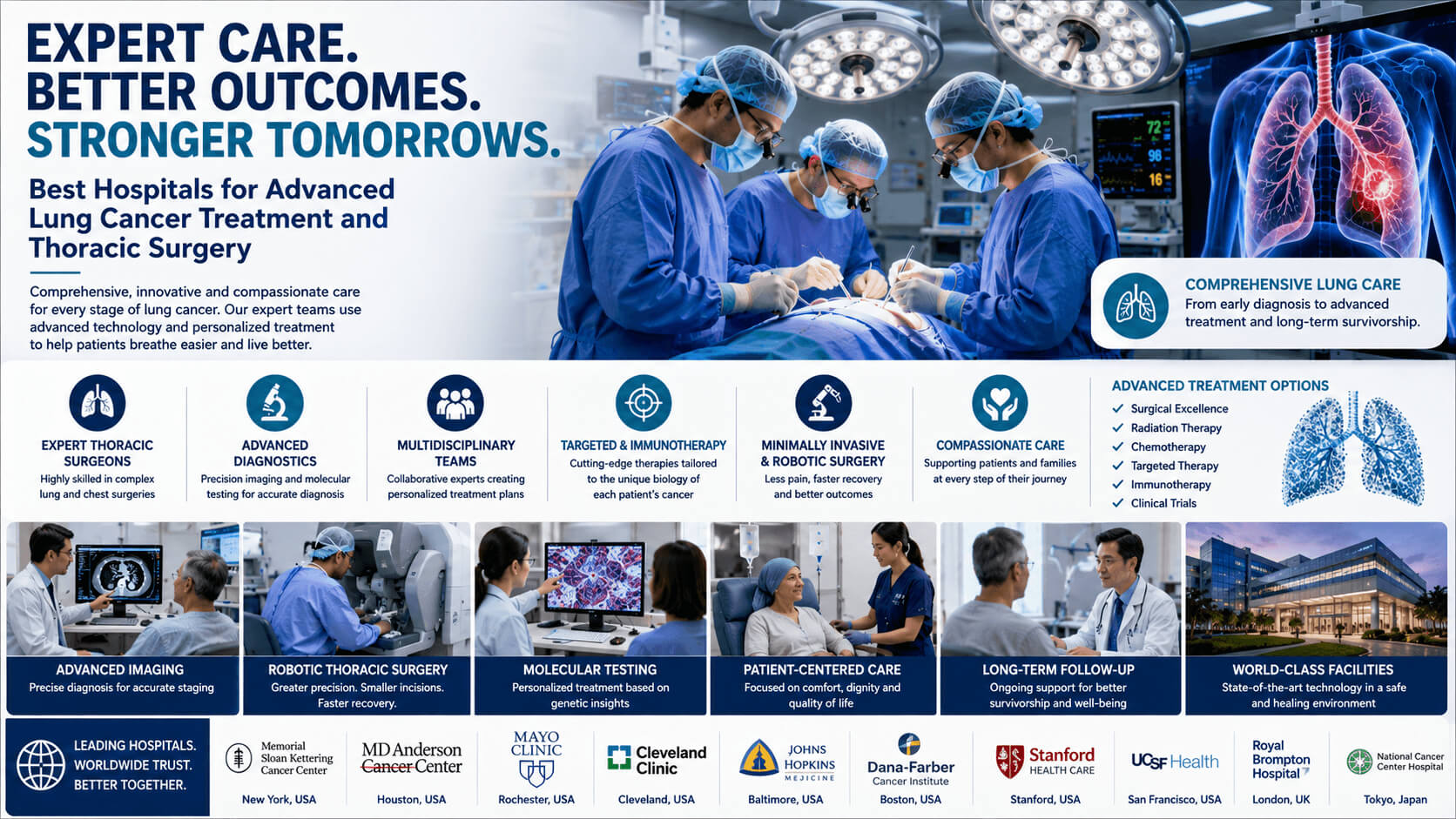
  • Best Hospitals for Advanced Lung Cancer Treatment and Thoracic Surgery

    Best Hospitals for Advanced Lung Cancer Treatment and Thoracic Surgery

    Lung cancer is one of the most complex diseases treated in modern oncology, often requiring close coordination between cancer specialists, thoracic surgeons, pulmonologists, radiologists, pathologists, and critical care teams. Treatment decisions can vary significantly depending on the type of lung cancer, the stage of disease, molecular characteristics, tumor location, and the overall health of the patient.

    Advanced lung cancer treatment has changed considerably with improvements in diagnostic imaging, minimally invasive surgery, radiation technology, molecular testing, targeted therapy, and immunotherapy. Patients can now undergo highly individualized evaluations that help specialists determine which combination of treatments may be appropriate.

    Thoracic surgery also covers a broad range of complex procedures involving the lungs, chest wall, mediastinum, and other structures inside the chest. Because these procedures can involve major blood vessels and delicate respiratory structures, treatment often requires specialized surgical expertise and advanced postoperative care.

    Leading hospitals for lung cancer treatment generally combine dedicated thoracic oncology programs with sophisticated imaging, molecular pathology laboratories, advanced radiation facilities, and multidisciplinary tumor boards.

    This article explores some of the world’s leading hospitals known for advanced lung cancer treatment and complex thoracic surgery.

    What Makes a Hospital a Leader in Lung Cancer and Thoracic Treatment?

    High-quality lung cancer treatment requires much more than a single specialist.

    The strongest programs integrate diagnostics, surgery, systemic treatment, radiation, and long-term follow-up.

    Specialized Thoracic Surgery Teams

    Thoracic surgeons manage complex conditions affecting the chest.

    Depending on the patient’s condition, surgery may involve:

    • Lung tumor removal
    • Lobectomy
    • Segmentectomy
    • Pneumonectomy
    • Chest wall reconstruction
    • Mediastinal surgery

    The most appropriate procedure depends on the location and extent of the disease.

    Advanced Cancer Diagnostics

    Accurate diagnosis is essential before treatment begins.

    Leading cancer centers may use:

    • High-resolution CT scanning
    • PET imaging
    • Advanced bronchoscopy
    • Endobronchial ultrasound
    • Molecular pathology

    These technologies help specialists evaluate tumor characteristics and determine the extent of disease.

    Multidisciplinary Treatment Planning

    Lung cancer treatment frequently requires input from multiple specialists.

    A multidisciplinary team may include:

    • Medical oncologists
    • Thoracic surgeons
    • Radiation oncologists
    • Pulmonologists
    • Radiologists
    • Pathologists
    • Molecular specialists

    Complex cases are often reviewed collectively to develop an individualized treatment plan.

    1. Memorial Sloan Kettering Cancer Center – New York, United States

    Memorial Sloan Kettering Cancer Center is internationally known for specialized cancer treatment and research.

    Its thoracic oncology programs provide evaluation and treatment for patients with complex lung cancers and other cancers affecting the chest.

    Patients may undergo detailed diagnostic evaluation before treatment decisions are made.

    Specialists consider:

    • Cancer type
    • Disease stage
    • Molecular characteristics
    • Previous treatment history
    • Overall health

    Advanced cancer centers also contribute to research involving new targeted therapies and treatment combinations.

    2. MD Anderson Cancer Center – Houston, United States

    MD Anderson Cancer Center is a major institution focused on comprehensive cancer treatment.

    Lung cancer patients may require a combination of therapies depending on their diagnosis.

    Treatment planning can involve:

    • Systemic therapy
    • Radiation treatment
    • Surgical evaluation
    • Molecular testing

    Multidisciplinary tumor boards can help specialists discuss complicated cases and evaluate different treatment pathways.

    Research and clinical trials may also provide access to emerging treatment approaches for eligible patients.

    3. Mayo Clinic – Rochester, United States

    Mayo Clinic provides multidisciplinary treatment for complex medical and surgical conditions.

    Patients with lung cancer may be evaluated by specialists across several departments.

    Advanced thoracic treatment can require coordination between surgery, oncology, pulmonology, pathology, and critical care.

    Detailed preoperative assessment is particularly important for patients undergoing major lung surgery.

    Specialists may evaluate respiratory function, cardiovascular health, and other factors that could influence surgical risk.

    4. Cleveland Clinic – Cleveland, United States

    Cleveland Clinic provides advanced treatment for complex respiratory and thoracic conditions.

    Patients with lung tumors may require specialized assessment before determining whether surgery is appropriate.

    Advanced imaging helps specialists understand:

    • Tumor location
    • Lymph node involvement
    • Relationship to major structures
    • Potential surgical challenges

    A multidisciplinary approach allows medical and surgical specialists to coordinate treatment strategies.

    5. Johns Hopkins Hospital – Baltimore, United States

    Johns Hopkins Hospital is a major academic medical center with expertise in complex cancer treatment and thoracic surgery.

    Academic institutions often combine clinical treatment with research into new diagnostic and therapeutic approaches.

    Patients with complex or rare thoracic tumors may benefit from access to specialized expertise.

    Research continues in areas such as:

    • Molecular oncology
    • Precision medicine
    • Immunotherapy
    • Advanced surgical techniques

    6. Dana-Farber Brigham Cancer Center – Boston, United States

    Dana-Farber Brigham Cancer Center provides specialized cancer care and advanced research programs.

    Lung cancer treatment increasingly depends on detailed biological analysis.

    Molecular testing can help identify genetic or biological features that may influence treatment selection.

    Not every tumor has an actionable molecular target.

    However, advanced testing can provide valuable information for selected patients.

    7. Stanford Health Care – Stanford, United States

    Stanford Health Care provides advanced treatment for complex cancers and thoracic diseases.

    Major academic medical centers often contribute to research involving new surgical technologies and precision medicine.

    Advanced treatment programs may evaluate whether minimally invasive surgery, systemic treatment, radiation, or a combination of approaches is most appropriate.

    Treatment recommendations are individualized based on patient-specific clinical information.

    8. University of California, San Francisco Medical Center – United States

    UCSF Medical Center provides specialized care for complex cancer and respiratory conditions.

    Thoracic oncology programs can coordinate treatment across multiple specialties.

    Patients may undergo detailed diagnostic evaluation before treatment.

    This can include advanced imaging, tissue analysis, and functional testing.

    Integrated medical systems can help coordinate the different stages of cancer care.

    9. Royal Brompton Hospital – London, United Kingdom

    Royal Brompton Hospital is associated with specialist respiratory and cardiothoracic medicine.

    Patients with complex chest conditions may require highly specialized evaluation.

    Advanced respiratory assessment can be important before major thoracic surgery.

    Specialists may evaluate lung function and overall cardiopulmonary health to determine potential treatment risks.

    10. National Cancer Center Hospital – Tokyo, Japan

    The National Cancer Center Hospital is a major institution specializing in cancer diagnosis and treatment.

    Japan has developed extensive expertise in advanced gastrointestinal and thoracic oncology.

    Specialized cancer centers may combine surgical treatment with radiation, systemic therapy, and advanced diagnostic services.

    The most appropriate treatment depends on the specific characteristics of the patient’s disease.

    Understanding Lung Cancer

    Lung cancer develops when abnormal cells grow within lung tissue.

    There are different types of lung cancer, and treatment depends heavily on the specific diagnosis.

    The two broad categories often discussed are:

    • Non-small cell lung cancer
    • Small cell lung cancer

    These conditions can behave differently and may require different treatment strategies.

    Early diagnosis can sometimes expand the available treatment options.

    However, treatment planning should always be based on a comprehensive medical evaluation.

    Advanced Diagnosis and Staging

    Before treatment, specialists need to understand the characteristics and extent of the disease.

    Diagnostic evaluation may include several steps.

    Advanced Imaging

    CT scans can provide detailed images of the lungs and chest.

    PET imaging may be used in selected cases to help evaluate potential disease activity elsewhere in the body.

    MRI may also be used when specialists need detailed imaging of particular areas.

    Bronchoscopy

    Bronchoscopy allows specialists to examine parts of the airway.

    Advanced techniques can also support tissue sampling.

    Endobronchial Ultrasound

    Endobronchial ultrasound can help specialists evaluate lymph nodes and structures near the airways.

    This procedure may provide important information for cancer staging.

    Molecular Testing and Precision Medicine

    Modern lung cancer treatment increasingly uses molecular testing.

    Specialists may analyze tumor tissue to identify specific genetic or biological characteristics.

    For selected patients, these findings may help determine whether targeted treatments could be appropriate.

    Molecular testing may evaluate different biomarkers depending on the cancer type and available testing methods.

    This approach has contributed to more personalized treatment strategies.

    Advanced Thoracic Surgery

    Surgery may be considered for selected patients depending on the stage and location of the disease.

    Major thoracic procedures can include removal of part or all of a lung.

    The goal is to remove diseased tissue while preserving as much healthy lung function as possible when medically appropriate.

    Preoperative planning is essential because every patient’s lung function and anatomy are different.

    Minimally Invasive and Robotic Thoracic Surgery

    Advances in surgical technology have expanded the use of minimally invasive techniques for selected thoracic procedures.

    Traditional open chest surgery may require a large incision and significant separation of the ribs. Modern approaches can sometimes reduce the size of surgical incisions.

    Techniques may include:

    • Video-assisted thoracoscopic surgery
    • Robotic-assisted thoracic surgery
    • Advanced image-guided procedures

    These approaches may offer potential benefits for appropriately selected patients, such as reduced surgical trauma and faster recovery.

    However, minimally invasive surgery is not suitable for every lung cancer or thoracic condition.

    The choice of surgical approach depends on tumor characteristics, location, anatomy, and the experience of the surgical team.

    Radiation Therapy for Lung Cancer

    Radiation therapy may be used as part of lung cancer treatment in selected situations.

    Modern radiation systems allow specialists to develop highly detailed treatment plans.

    Advanced techniques may include:

    • Intensity-modulated radiation therapy
    • Image-guided radiation therapy
    • Stereotactic body radiation therapy

    These technologies can help focus radiation more precisely on treatment areas while considering nearby healthy organs.

    Radiation may be used alone or in combination with surgery and systemic treatment depending on the patient’s diagnosis.

    Chemotherapy and Systemic Treatment

    Chemotherapy remains an important treatment option for many patients with lung cancer.

    Systemic treatment may be used:

    • Before surgery in selected cases
    • After surgery
    • Alongside radiation
    • For advanced disease

    The specific treatment plan depends on cancer type, stage, molecular characteristics, and previous therapies.

    Oncology teams monitor patients throughout treatment to evaluate response and manage potential side effects.

    Targeted Therapy

    Targeted cancer treatments are designed to act on specific molecular characteristics associated with certain tumors.

    Molecular testing may identify changes that could influence treatment selection.

    For selected patients, targeted therapy can become an important component of treatment.

    Not every lung cancer contains a targetable alteration.

    The availability and suitability of targeted medicines depend on detailed pathology and molecular testing.

    Immunotherapy

    Immunotherapy has become an important area of modern lung cancer treatment.

    Certain immunotherapy medicines are designed to help the immune system recognize or respond to cancer cells.

    Eligibility depends on multiple factors, including:

    • Cancer type
    • Biomarker testing
    • Disease stage
    • Previous treatment
    • Overall patient health

    Immunotherapy can also produce significant side effects and requires specialist monitoring.

    Treatment decisions should be made with qualified oncology professionals.

    Advanced Bronchoscopic Treatment

    Modern pulmonology includes increasingly sophisticated bronchoscopic techniques.

    Advanced bronchoscopy can support:

    • Tissue sampling
    • Lymph node evaluation
    • Airway assessment
    • Management of selected airway obstructions

    These minimally invasive procedures can play an important role in diagnosis and treatment planning.

    Advanced navigation technologies may also help specialists reach difficult areas within the lungs.

    Lung Function Assessment Before Surgery

    Before major thoracic surgery, patients often undergo detailed respiratory evaluation.

    Testing may assess:

    • Lung capacity
    • Oxygen exchange
    • Exercise tolerance
    • Cardiovascular fitness

    These assessments help specialists estimate whether a patient is likely to tolerate removal of lung tissue.

    Preoperative evaluation is particularly important because lung cancer patients may have underlying respiratory conditions.

    Recovery After Thoracic Surgery

    Recovery varies depending on the type and extent of surgery.

    Patients may initially require monitoring for:

    • Breathing function
    • Pain management
    • Oxygen levels
    • Surgical drainage
    • Signs of infection

    Early mobilization and respiratory exercises may be recommended as part of recovery.

    The length of hospitalization varies depending on the procedure and individual recovery.

    Patients may continue to regain strength for weeks or months after major surgery.

    Pulmonary Rehabilitation

    Pulmonary rehabilitation may be beneficial for selected patients before or after thoracic treatment.

    Programs can include:

    • Supervised exercise
    • Breathing techniques
    • Physical conditioning
    • Education about respiratory health

    The goal is to help patients improve or maintain functional capacity.

    Programs should be individualized based on the patient’s medical condition.

    Potential Risks and Complications

    Thoracic surgery is a major medical procedure and can involve significant risks.

    Possible complications may include:

    • Bleeding
    • Infection
    • Air leaks
    • Breathing difficulties
    • Blood clots
    • Heart rhythm changes

    The individual risk profile depends on the patient’s overall health, lung function, and complexity of the procedure.

    Patients should discuss potential risks and expected benefits directly with their medical team.

    Supportive and Palliative Care

    Supportive care can be an important part of treatment for patients with advanced lung cancer.

    It may help address symptoms and treatment-related challenges.

    Supportive care can include:

    • Pain management
    • Breathing support
    • Nutritional guidance
    • Psychological support
    • Symptom management

    Supportive and palliative care can be provided alongside active cancer treatment.

    How International Patients Can Choose a Lung Cancer Hospital

    International patients considering treatment abroad should carefully evaluate specialist programs.

    Important considerations include:

    Thoracic Surgical Expertise

    Patients considering surgery should evaluate the hospital’s experience with complex thoracic procedures.

    Advanced Molecular Testing

    Modern lung cancer treatment may depend on detailed pathology and molecular analysis.

    Multidisciplinary Cancer Teams

    Access to surgery, oncology, radiation therapy, and pulmonology can support coordinated treatment.

    International Patient Services

    Major hospitals may provide medical record review, appointment coordination, translation, and treatment planning assistance.

    Patients should verify services directly with the hospital.

    Cost Factors in Lung Cancer Treatment

    Lung cancer treatment costs can vary substantially.

    Expenses may include:

    • Specialist consultations
    • Advanced imaging
    • Biopsy and pathology
    • Molecular testing
    • Surgery
    • Hospitalization
    • Radiation therapy
    • Systemic treatment
    • Long-term follow-up

    The total cost depends on the treatment pathway and the patient’s individual medical circumstances.

    Complications and prolonged hospitalization can also affect expenses.

    Future Developments in Lung Cancer Treatment

    Research continues to advance treatment options.

    Earlier Detection

    Researchers are developing improved screening and diagnostic methods designed to identify lung cancer earlier.

    Artificial Intelligence

    AI is being explored for medical imaging analysis, pathology evaluation, and identification of complex patterns.

    Advanced Robotic Surgery

    Robotic technology continues to develop and may support greater surgical precision in selected procedures.

    Personalized Cancer Vaccines

    Researchers are investigating personalized vaccines and other immune-based approaches.

    New Targeted Treatments

    Continued molecular research is identifying new potential targets for cancer treatment.

    Frequently Asked Questions

    What is thoracic surgery?

    Thoracic surgery involves procedures affecting organs and structures inside the chest, including the lungs, chest wall, and mediastinum.

    Is surgery appropriate for every lung cancer patient?

    No. Surgical eligibility depends on factors such as cancer stage, tumor location, overall health, and lung function.

    What is minimally invasive thoracic surgery?

    It refers to surgical approaches using smaller incisions, including video-assisted and robotic-assisted techniques, for selected patients.

    Why is molecular testing important in lung cancer?

    Molecular testing can identify biological characteristics that may influence whether certain targeted treatments are appropriate.

    How long does recovery take after lung surgery?

    Recovery varies based on the type of procedure, the amount of lung tissue removed, patient health, and possible complications.

    Can international patients receive lung cancer treatment abroad?

    Many major cancer centers provide services for international patients, but medical records and diagnostic information are often reviewed before treatment planning.

  • Top Hospitals Worldwide for Bone Marrow Transplant and Advanced Hematology Care

    Top Hospitals Worldwide for Bone Marrow Transplant and Advanced Hematology Care

    Bone marrow transplantation and advanced hematology care represent highly specialized areas of modern medicine. Patients with serious blood disorders, certain cancers, immune system conditions, and bone marrow failure may require treatment at hospitals with dedicated transplant programs and multidisciplinary hematology teams.

    A bone marrow transplant, often referred to clinically as a hematopoietic stem cell transplant, involves replacing damaged or diseased blood-forming cells with healthy stem cells. Depending on the medical condition, the cells may come from the patient or from a compatible donor.

    These procedures can be used in the treatment of selected cases involving leukemia, lymphoma, multiple myeloma, aplastic anemia, and other complex hematological conditions.

    The transplant process can be physically demanding and requires careful preparation, specialized treatment, infection prevention, and long-term follow-up. For this reason, patients often benefit from hospitals that have extensive experience in hematology, oncology, transplantation, immunology, and critical care.

    Leading bone marrow transplant centers typically provide advanced laboratory facilities, dedicated transplant units, donor matching programs, cellular therapy research, and comprehensive supportive care.

    This article explores major hospitals worldwide known for advanced bone marrow transplantation and complex hematology treatment.

    What Makes a Hospital Strong in Bone Marrow Transplantation?

    A successful transplant program depends on much more than the transplant procedure itself.

    Patients require specialized care before, during, and after transplantation.

    Specialized Hematology Teams

    Complex blood disorders often require care from multiple specialists.

    A comprehensive transplant team may include:

    • Hematologists
    • Medical oncologists
    • Transplant physicians
    • Immunologists
    • Infectious disease specialists
    • Pathologists
    • Critical care physicians

    This multidisciplinary approach can help manage the complex challenges associated with blood cancers and transplantation.

    Advanced Stem Cell Laboratories

    Stem cell transplantation requires sophisticated laboratory infrastructure.

    Specialized facilities may support:

    • Stem cell collection
    • Cell processing
    • Cryopreservation
    • Compatibility testing
    • Advanced cellular analysis

    Laboratory quality and coordination are important components of complex transplant programs.

    Infection Prevention and Supportive Care

    Patients undergoing intensive treatment before transplantation may experience significant suppression of the immune system.

    Specialized transplant units use strict infection prevention measures and close monitoring.

    Supportive care may include:

    • Blood transfusions
    • Antimicrobial treatment
    • Nutritional support
    • Pain management
    • Intensive monitoring

    1. MD Anderson Cancer Center – Houston, United States

    MD Anderson Cancer Center is internationally recognized for cancer treatment and advanced hematological care.

    Patients with leukemia, lymphoma, and other blood cancers may require highly specialized treatment strategies.

    Large cancer centers can integrate:

    • Hematology
    • Oncology
    • Stem cell transplantation
    • Cellular therapy
    • Clinical research

    Complex cases are often reviewed by multidisciplinary teams to determine the most appropriate treatment pathway.

    Research into new therapies and transplant techniques also remains an important component of major academic cancer centers.

    2. Memorial Sloan Kettering Cancer Center – New York, United States

    Memorial Sloan Kettering Cancer Center provides specialized treatment for a wide range of cancers, including complex hematological malignancies.

    Advanced transplant programs evaluate patients individually to determine whether stem cell transplantation may be appropriate.

    The source of stem cells can vary.

    Depending on the condition, treatment may involve:

    • Autologous transplantation
    • Allogeneic transplantation
    • Donor-based cellular therapy

    Each approach involves different considerations and potential risks.

    3. Mayo Clinic – Rochester, United States

    Mayo Clinic provides multidisciplinary treatment for complex medical conditions and advanced hematology care.

    Patients being considered for transplantation undergo comprehensive evaluation.

    This may include assessment of:

    • Overall health
    • Organ function
    • Previous treatments
    • Infection status
    • Disease characteristics

    A detailed evaluation helps specialists determine whether transplantation is appropriate and which treatment approach may be most suitable.

    4. Dana-Farber Brigham Cancer Center – Boston, United States

    Dana-Farber Brigham Cancer Center is associated with advanced cancer research and hematological treatment.

    Academic cancer centers play an important role in the development of new therapies for blood cancers.

    Research areas may include:

    • Stem cell biology
    • Immunotherapy
    • Cellular treatment
    • Precision medicine
    • Targeted cancer therapies

    Patients with complex or difficult-to-treat blood disorders may benefit from evaluation at specialized programs with access to multidisciplinary expertise.

    5. Cleveland Clinic – Cleveland, United States

    Cleveland Clinic provides advanced care for patients with complex medical and hematological conditions.

    Bone marrow transplantation requires extensive coordination before the procedure.

    Patients may undergo conditioning treatment designed to prepare the body for transplantation.

    The intensity of treatment depends on factors such as:

    • Disease type
    • Patient age
    • Overall health
    • Transplant approach

    Specialists monitor patients carefully throughout the treatment process.

    6. Johns Hopkins Hospital – Baltimore, United States

    Johns Hopkins Hospital is a major academic medical institution with expertise in complex hematological treatment and transplantation research.

    Advanced transplant medicine continues to evolve through research into:

    • Donor compatibility
    • Immune system regulation
    • Reduced-intensity conditioning
    • Cellular therapies

    Academic institutions contribute to the development of new approaches for managing transplant-related complications.

    Complex patients may require individualized treatment planning involving multiple medical specialties.

    7. Fred Hutchinson Cancer Center – Seattle, United States

    Fred Hutchinson Cancer Center is internationally associated with research and treatment involving hematology and stem cell transplantation.

    Specialized cancer research institutions contribute significantly to the advancement of cellular therapies.

    Patients with complex blood cancers may undergo detailed evaluation for transplant eligibility.

    Advanced programs may also provide access to research involving new forms of immunotherapy and cellular treatment.

    8. The Royal Marsden – London, United Kingdom

    The Royal Marsden is a specialized cancer hospital with expertise in oncology and hematological conditions.

    Comprehensive cancer treatment requires coordination between diagnostic services, hematology specialists, transplant teams, and supportive care providers.

    Patients undergoing intensive therapy may require careful monitoring for treatment-related complications.

    Specialized cancer centers often develop protocols designed to support patients throughout different stages of treatment.

    9. University Hospital Heidelberg – Heidelberg, Germany

    University Hospital Heidelberg is a major European academic medical center with advanced cancer and hematology programs.

    Complex blood diseases can require highly individualized treatment.

    Academic centers combine clinical expertise with research into:

    • Molecular diagnostics
    • Precision medicine
    • Advanced transplantation
    • Cellular immunotherapy

    Research continues to expand the understanding of blood cancer biology and treatment response.

    10. National University Hospital – Singapore

    National University Hospital provides advanced treatment across multiple medical specialties.

    Large tertiary hospitals can support complex transplant programs through coordinated services.

    Bone marrow transplant patients may require access to:

    • Specialized laboratories
    • Intensive care
    • Infectious disease services
    • Advanced imaging
    • Long-term follow-up

    A coordinated healthcare system is important because transplant patients may require treatment from multiple departments.

    Understanding Bone Marrow and Stem Cell Transplantation

    Bone marrow is responsible for producing important blood cells.

    These include:

    • Red blood cells
    • White blood cells
    • Platelets

    When the bone marrow is damaged or affected by serious disease, normal blood cell production can be disrupted.

    Hematopoietic stem cell transplantation may help restore blood-forming function in selected patients.

    The procedure involves the infusion of healthy stem cells into the bloodstream.

    These cells can migrate to the bone marrow and begin producing new blood cells.

    Conditions That May Require Bone Marrow Transplantation

    Stem cell transplantation may be considered for selected patients with conditions such as:

    • Leukemia
    • Lymphoma
    • Multiple myeloma
    • Aplastic anemia
    • Myelodysplastic syndromes
    • Certain inherited blood disorders

    Not every patient with these conditions requires a transplant.

    The decision depends on disease characteristics, treatment response, patient health, and other clinical factors.

    Autologous Stem Cell Transplantation

    Autologous transplantation uses the patient’s own stem cells.

    Stem cells may be collected and preserved before intensive treatment.

    After treatment, the stored cells can be returned to the patient.

    This approach may be considered for selected patients with certain blood cancers.

    Because the cells originate from the patient, the risks differ from donor-based transplantation.

    However, the appropriate approach depends entirely on the underlying disease and medical circumstances.

    Allogeneic Stem Cell Transplantation

    Allogeneic transplantation uses stem cells from another person.

    The donor may be a family member or an unrelated compatible donor.

    Finding an appropriate donor involves specialized compatibility testing.

    The immune system interaction between donor cells and the recipient can be medically important.

    Allogeneic transplantation can offer therapeutic benefits for selected diseases but also involves significant risks and requires specialized long-term monitoring.

    Donor Matching and Compatibility Testing

    For allogeneic stem cell transplantation, identifying an appropriate donor is an important part of the treatment process.

    Specialized laboratories perform compatibility testing to evaluate human leukocyte antigen characteristics. These markers play an important role in immune system recognition.

    Potential donors may include:

    • Siblings
    • Other family members
    • Unrelated volunteer donors
    • Umbilical cord blood sources in selected situations

    The availability of a suitable donor can vary significantly between patients.

    Advanced transplant centers often work with specialized donor registries and international networks when appropriate.

    Conditioning Treatment Before Transplantation

    Before receiving donor or previously collected stem cells, patients may undergo conditioning treatment.

    The purpose and intensity of conditioning vary depending on the disease and transplant strategy.

    Treatment may involve chemotherapy, radiation therapy in selected cases, or other approaches designed to prepare the body for transplantation.

    Conditioning can be intensive and may temporarily suppress the immune system and bone marrow function.

    Patients require careful medical monitoring throughout this stage.

    Reduced-intensity approaches may be considered for selected patients based on factors such as age, health status, and disease characteristics.

    Stem Cell Collection and Processing

    Stem cells can be collected from several sources depending on the transplant plan.

    Collection methods may involve peripheral blood, bone marrow, or other approved sources.

    After collection, cells may undergo specialized laboratory processing.

    This can involve:

    • Cell counting
    • Viability assessment
    • Compatibility testing
    • Cryopreservation when necessary

    Advanced cell-processing laboratories play an important role in maintaining quality throughout the transplantation process.

    CAR-T Cell Therapy and Advanced Cellular Treatment

    Cellular therapy has become an important area of research and treatment for selected hematological cancers.

    CAR-T cell therapy involves modifying a patient’s immune cells in specialized laboratory settings before they are returned to the body.

    These engineered cells are designed to recognize specific targets.

    CAR-T therapy is not appropriate for every blood cancer or every patient.

    Treatment eligibility depends on the specific disease, previous therapies, approved indications, and specialist assessment.

    Patients receiving advanced cellular therapies require careful monitoring because serious treatment-related complications can occur.

    Immunotherapy in Hematology

    Modern hematology increasingly uses treatments designed to interact with the immune system.

    Depending on the disease, advanced treatment strategies may include:

    • Monoclonal antibodies
    • Cellular therapies
    • Immune-modulating medications
    • Targeted therapies

    Research continues to improve understanding of how the immune system interacts with blood cancers and transplant-related conditions.

    Personalized treatment planning can help specialists select appropriate options for individual patients.

    Recovery After Bone Marrow Transplantation

    Recovery following a stem cell transplant can take considerable time.

    The initial period after transplantation is particularly important because the patient’s immune system may be significantly weakened.

    Medical teams monitor:

    • Blood cell recovery
    • Signs of infection
    • Organ function
    • Medication response
    • Potential transplant complications

    Patients may require protective measures during periods of severe immune suppression.

    The length of hospitalization varies depending on the transplant type, patient condition, and recovery progress.

    Engraftment and Blood Cell Recovery

    Engraftment refers to the process in which transplanted stem cells begin producing new blood cells.

    This is an important stage of recovery.

    Medical teams regularly monitor blood counts to assess:

    • White blood cell recovery
    • Red blood cell production
    • Platelet recovery

    The timing of engraftment can vary.

    Patients may require transfusions and other supportive treatments while waiting for blood cell production to improve.

    Graft-Versus-Host Disease

    Graft-versus-host disease, often called GVHD, is a potential complication of allogeneic transplantation.

    It occurs when donor immune cells react against tissues in the recipient’s body.

    GVHD can affect different organs and may range from mild to severe.

    Potentially affected areas can include:

    • Skin
    • Digestive system
    • Liver
    • Other organs

    Specialized transplant teams monitor patients closely for early signs of complications.

    Prevention and treatment strategies may involve medications designed to regulate immune system activity.

    Infection Prevention and Management

    Infection prevention is a major component of transplant care.

    During periods of immune suppression, patients can become more vulnerable to bacterial, viral, and fungal infections.

    Specialized transplant programs may use:

    • Protective hospital environments
    • Infection monitoring
    • Preventive medications
    • Vaccination planning
    • Strict hygiene protocols

    Patients may continue to require infection-related precautions after leaving the hospital.

    The appropriate duration depends on immune recovery and individual medical circumstances.

    Long-Term Follow-Up After Transplantation

    Stem cell transplantation requires continued medical monitoring.

    Long-term follow-up may involve:

    • Blood testing
    • Immune system assessment
    • Cancer surveillance
    • Organ function monitoring
    • Medication management

    Some patients may require rehabilitation or supportive care after intensive treatment.

    Regular follow-up helps specialists monitor recovery and identify late complications.

    Nutrition and Supportive Care

    Intensive cancer and transplant treatment can affect appetite and nutritional status.

    Patients may experience:

    • Weight loss
    • Reduced appetite
    • Digestive problems
    • Fatigue

    Nutrition specialists can provide individualized support during recovery.

    Comprehensive transplant programs may also provide psychological and rehabilitation services.

    Supportive care is an important part of maintaining quality of life throughout the treatment process.

    How International Patients Can Choose a Bone Marrow Transplant Hospital

    International patients should carefully evaluate transplant programs before traveling abroad.

    Important considerations include:

    Specialized Transplant Experience

    The hospital should have expertise in the patient’s specific disease and recommended transplant type.

    Advanced Cell Therapy Facilities

    Some patients may require access to specialized cellular therapy or advanced laboratory services.

    Infection Control Infrastructure

    Transplant patients may require protective environments and rapid access to infectious disease specialists.

    Donor Coordination

    International patients should understand how donor matching and transplant eligibility will be managed.

    Long-Term Follow-Up

    Follow-up planning is essential because transplant recovery can continue for months or longer.

    Patients should discuss how care will be coordinated after returning home.

    Cost Factors in Bone Marrow Transplantation

    Bone marrow transplantation can involve substantial medical expenses.

    Potential cost components include:

    • Specialist evaluation
    • Donor compatibility testing
    • Stem cell collection
    • Conditioning treatment
    • Hospitalization
    • Intensive care
    • Laboratory testing
    • Medication
    • Long-term monitoring

    The total cost varies considerably depending on the transplant type, country, hospital, complications, and duration of treatment.

    Future Developments in Hematology and Stem Cell Transplantation

    Research continues to transform the treatment of blood disorders.

    Improved Cellular Therapy

    Scientists are developing new cellular therapies designed to target specific cancer cells more effectively.

    Gene-Based Treatment

    Research into genetic medicine may create new treatment possibilities for inherited blood disorders.

    Personalized Transplant Strategies

    Advanced biological testing may help specialists better predict transplant compatibility and potential complications.

    Artificial Intelligence in Hematology

    AI technologies are being explored for analyzing complex laboratory data and identifying disease patterns.

    Safer Conditioning Approaches

    Researchers continue to investigate ways to reduce treatment toxicity while maintaining therapeutic effectiveness.

    Frequently Asked Questions

    What is a bone marrow transplant?

    A bone marrow or hematopoietic stem cell transplant involves infusing healthy blood-forming stem cells to help restore bone marrow function in selected patients.

    What is the difference between autologous and allogeneic transplantation?

    Autologous transplantation uses the patient’s own previously collected stem cells, while allogeneic transplantation uses stem cells from a compatible donor.

    How long does recovery take?

    Recovery varies significantly. Initial blood cell recovery may occur over weeks, while immune system recovery and long-term monitoring can continue for months or longer.

    What is graft-versus-host disease?

    GVHD is a potential complication of donor stem cell transplantation in which donor immune cells react against tissues in the recipient.

    Is CAR-T therapy the same as a bone marrow transplant?

    No. CAR-T therapy and stem cell transplantation are different treatments, although both involve advanced cellular medicine and may be used for selected hematological cancers.

    Can international patients receive bone marrow transplant treatment abroad?

    Some major transplant centers accept international patients, but eligibility, donor coordination, travel requirements, and long-term follow-up must be carefully planned.

  • Best Hospitals for Pancreatic Cancer Surgery and Advanced Gastrointestinal Treatment

    Best Hospitals for Pancreatic Cancer Surgery and Advanced Gastrointestinal Treatment

    Pancreatic cancer and complex gastrointestinal diseases require some of the most specialized treatment available in modern medicine. The pancreas is located deep within the abdomen and is closely connected to major blood vessels, the bile ducts, stomach, liver, and small intestine. This complex anatomy makes pancreatic surgery particularly challenging and requires careful planning by highly experienced multidisciplinary teams.

    Treatment for pancreatic cancer can involve surgery, chemotherapy, radiation therapy, targeted treatment, supportive care, and advanced diagnostic procedures. The most appropriate approach depends on factors such as the location and stage of the tumor, involvement of nearby blood vessels, overall patient health, and biological characteristics of the disease.

    Not every patient with pancreatic cancer is immediately eligible for surgery. In some cases, systemic treatment may be recommended before an operation. Other patients may require non-surgical approaches or specialized procedures to manage symptoms and complications.

    Leading hospitals for pancreatic cancer treatment usually combine pancreatic surgeons, gastrointestinal specialists, medical oncologists, radiation oncologists, radiologists, pathologists, and critical care teams. This multidisciplinary structure is particularly important because treatment decisions can be complex and may need to change as the patient’s condition evolves.

    Advanced gastrointestinal treatment also extends beyond pancreatic cancer. Major medical centers manage complex diseases involving the stomach, liver, bile ducts, intestines, colon, rectum, and other digestive organs.

    What Makes a Hospital a Leader in Pancreatic and Gastrointestinal Treatment?

    Pancreatic and complex gastrointestinal surgery requires more than advanced operating rooms.

    The strongest treatment programs typically combine specialized expertise, sophisticated diagnostics, multidisciplinary planning, and comprehensive postoperative care.

    Experienced Pancreatic and GI Surgeons

    Pancreatic surgery is technically demanding.

    Major procedures may involve complex reconstruction of digestive and biliary structures.

    Experienced specialists may perform procedures involving:

    • Pancreatic tumors
    • Bile duct conditions
    • Complex gastrointestinal cancers
    • Pancreatic cysts
    • Neuroendocrine tumors

    Surgeon experience with a specific procedure can be an important consideration when evaluating treatment options.

    Multidisciplinary Cancer Care

    Pancreatic cancer treatment often requires input from several specialties.

    A multidisciplinary team may include:

    • Surgical oncologists
    • Medical oncologists
    • Radiation oncologists
    • Gastroenterologists
    • Pathologists
    • Radiologists
    • Nutrition specialists

    This collaboration can help create a more coordinated treatment strategy.

    Advanced Diagnostic Technology

    Accurate staging is essential before treatment decisions are made.

    Major cancer centers may use:

    • High-resolution CT scans
    • MRI
    • Endoscopic ultrasound
    • PET imaging in selected situations
    • Advanced pathology testing

    These tools help specialists evaluate the extent of disease and determine which treatment options may be appropriate.

    1. Mayo Clinic – Rochester, United States

    Mayo Clinic is internationally known for multidisciplinary treatment and complex surgical care.

    Patients with pancreatic and gastrointestinal cancers may require coordinated evaluation from multiple departments.

    Before major surgery, specialists may assess:

    • Tumor location
    • Blood vessel involvement
    • Overall health
    • Nutritional condition
    • Surgical risks

    This detailed assessment helps determine whether surgery is appropriate.

    Complex cancer treatment often requires a carefully planned sequence involving surgery, systemic therapy, and other approaches.

    2. Memorial Sloan Kettering Cancer Center – New York, United States

    Memorial Sloan Kettering Cancer Center specializes in cancer treatment and advanced oncological surgery.

    Pancreatic cancer patients may require highly individualized treatment plans.

    Cancer specialists evaluate factors such as:

    • Tumor biology
    • Disease stage
    • Response to previous treatment
    • Surgical possibilities

    Advanced cancer centers can coordinate systemic treatment and surgical evaluation within a single specialized program.

    Research and clinical trials may also contribute to the development of new treatment strategies for selected patients.

    3. Johns Hopkins Hospital – Baltimore, United States

    Johns Hopkins Hospital has a long association with pancreatic disease research and complex surgical treatment.

    Academic medical centers can provide specialized expertise for difficult pancreatic and gastrointestinal conditions.

    Patients with complex tumors may require detailed assessment of their relationship to major blood vessels.

    Some tumors can involve critical structures that make surgery more technically challenging.

    Specialized surgical teams use advanced imaging and multidisciplinary planning to determine the most appropriate treatment approach.

    4. MD Anderson Cancer Center – Houston, United States

    MD Anderson Cancer Center is internationally recognized for comprehensive cancer treatment.

    Advanced pancreatic cancer care may involve multiple treatment stages.

    Depending on the patient’s condition, treatment may include:

    • Systemic therapy
    • Radiation treatment
    • Surgical evaluation
    • Supportive care

    Multidisciplinary tumor boards can help specialists review complex cases.

    This collaborative process allows different medical experts to discuss diagnostic findings and possible treatment strategies.

    5. Cleveland Clinic – Cleveland, United States

    Cleveland Clinic provides advanced surgical and digestive disease treatment.

    Complex gastrointestinal conditions may require coordinated care between surgeons, gastroenterologists, oncologists, and other specialists.

    Patients with pancreatic disorders may require treatment for conditions such as:

    • Pancreatic tumors
    • Pancreatitis
    • Pancreatic cysts
    • Biliary obstruction

    Not every pancreatic condition requires major surgery.

    Specialized evaluation helps determine whether monitoring, endoscopic treatment, medication, or surgery is most appropriate.

    6. Massachusetts General Hospital – Boston, United States

    Massachusetts General Hospital provides complex surgical care within a major academic medical environment.

    Pancreatic and gastrointestinal surgery requires detailed preoperative planning.

    Modern imaging can help specialists create a clearer understanding of:

    • Tumor boundaries
    • Blood vessel anatomy
    • Organ relationships
    • Potential surgical challenges

    Complex operations may require reconstruction after tumor removal.

    Experienced surgical and critical care teams are important during the postoperative recovery period.

    7. University of Pittsburgh Medical Center – Pittsburgh, United States

    UPMC provides specialized treatment for complex digestive and surgical conditions.

    Large tertiary medical centers can manage patients requiring extensive evaluation before high-risk abdominal surgery.

    Patients with complicated pancreatic conditions may require several diagnostic procedures before a final treatment strategy is selected.

    Advanced hospitals can coordinate imaging, pathology, endoscopy, surgery, and postoperative care within an integrated healthcare system.

    8. University of California, San Francisco Medical Center – United States

    UCSF Medical Center provides specialized care for complex gastrointestinal and cancer-related conditions.

    Academic medical centers often combine clinical treatment with research into new diagnostic and therapeutic approaches.

    Complex GI cancer care can involve personalized treatment planning based on individual disease characteristics.

    Patients may also require nutritional support before and after major abdominal surgery.

    Maintaining adequate nutrition can be particularly challenging for patients with pancreatic and digestive diseases.

    9. Heidelberg University Hospital – Heidelberg, Germany

    Heidelberg University Hospital is a major European academic medical center known for advanced cancer treatment and surgical research.

    Complex pancreatic cancer treatment may require close coordination between diagnostic specialists and surgical teams.

    Academic hospitals continue to research new approaches involving:

    • Precision oncology
    • Advanced imaging
    • Surgical technology
    • Personalized cancer treatment

    Patients with complicated disease may benefit from access to multiple specialist opinions.

    10. National Cancer Center Hospital – Tokyo, Japan

    Japan has developed advanced capabilities in gastrointestinal cancer diagnosis and treatment.

    Specialized cancer centers can provide highly focused expertise for cancers affecting the digestive system.

    Advanced treatment programs may integrate surgery with systemic treatment and detailed diagnostic evaluation.

    The selection of treatment depends on the individual characteristics of each case.

    Understanding Pancreatic Cancer

    Pancreatic cancer develops when abnormal cells grow within pancreatic tissue.

    The disease can be challenging to diagnose because early symptoms may be subtle or absent.

    Symptoms can vary depending on the location and progression of the condition.

    Specialized evaluation may include imaging and laboratory testing.

    A diagnosis should be confirmed and assessed by qualified medical professionals before treatment planning begins.

    Advanced Diagnostic Evaluation

    Accurate diagnosis and staging are essential before selecting treatment.

    Specialists may use several diagnostic approaches.

    CT and MRI Imaging

    Advanced imaging can help evaluate the pancreas and surrounding structures.

    These scans may provide information about:

    • Tumor location
    • Tumor size
    • Blood vessel involvement
    • Potential spread of disease

    Endoscopic Ultrasound

    Endoscopic ultrasound allows specialists to obtain detailed images from inside the digestive tract.

    It may also support tissue sampling in selected situations.

    Pathology Testing

    Pathologists analyze tissue samples to identify tumor characteristics.

    Advanced testing may provide additional information about the biological features of certain cancers.

    Pancreatic Cancer Surgery

    Surgery may be considered for selected patients when specialists determine that the tumor can be appropriately treated through an operation.

    The type of surgery depends on the tumor’s location.

    Major pancreatic procedures can include:

    • Pancreaticoduodenectomy
    • Distal pancreatectomy
    • Total pancreatectomy in selected situations

    These are major operations requiring extensive surgical expertise.

    The Whipple Procedure

    Pancreaticoduodenectomy, commonly known as the Whipple procedure, is one of the most complex operations in abdominal surgery.

    It may be performed for selected tumors located in the head of the pancreas and nearby structures.

    The procedure involves removal and reconstruction of multiple digestive structures.

    Because of its complexity, patients may benefit from treatment at centers with extensive experience in pancreatic surgery.

    Distal Pancreatectomy and Total Pancreatectomy

    The type of pancreatic surgery depends largely on the location and extent of the disease.

    A distal pancreatectomy may be considered for selected conditions affecting the body or tail of the pancreas. Depending on the situation, surrounding structures such as the spleen may also require surgical consideration.

    Total pancreatectomy involves removal of the entire pancreas and is generally reserved for carefully selected cases.

    Because the pancreas plays an important role in digestion and blood sugar regulation, patients undergoing extensive pancreatic surgery may require long-term medical management.

    Specialist teams help patients understand the potential effects of surgery before treatment.

    Minimally Invasive Pancreatic Surgery

    Advances in surgical technology have expanded minimally invasive approaches for selected pancreatic procedures.

    Depending on the patient’s condition, specialists may use:

    • Laparoscopic surgery
    • Robotic-assisted surgery
    • Advanced imaging-guided techniques

    These approaches use smaller incisions than traditional open surgery.

    Potential benefits in appropriately selected patients may include reduced surgical trauma and shorter recovery periods.

    However, minimally invasive surgery is not appropriate for every pancreatic tumor or gastrointestinal condition.

    The choice of technique depends on tumor characteristics, anatomy, surgical complexity, and the experience of the medical team.

    Chemotherapy for Pancreatic Cancer

    Systemic therapy plays an important role in the treatment of many pancreatic cancers.

    Chemotherapy may be considered:

    • Before surgery in selected cases
    • After surgery
    • When surgery is not appropriate
    • For advanced disease

    The treatment plan depends on the individual characteristics of the cancer and the patient’s overall health.

    Oncology teams monitor treatment response and potential side effects throughout therapy.

    Some patients may undergo repeated imaging and laboratory testing to evaluate how the disease responds to treatment.

    Radiation Therapy and Advanced Treatment Planning

    Radiation therapy may be considered for selected pancreatic cancer patients.

    Modern radiation technology can help specialists deliver treatment with detailed planning around complex abdominal structures.

    The pancreas is located near several sensitive organs, making precise treatment planning important.

    Radiation oncologists evaluate whether radiation is appropriate based on factors such as:

    • Tumor location
    • Previous treatments
    • Overall treatment strategy
    • Nearby organs

    Radiation may be used alongside other treatment approaches in selected situations.

    Targeted Therapy and Precision Oncology

    Cancer treatment is increasingly moving toward more individualized approaches.

    Advanced pathology and molecular testing may identify specific biological characteristics of some tumors.

    For selected patients, this information may help specialists determine whether particular targeted treatments or clinical trials could be relevant.

    Precision oncology does not mean that every cancer has an available targeted treatment.

    However, continued research is expanding the understanding of pancreatic cancer biology.

    Immunotherapy Research

    Immunotherapy has transformed treatment for several types of cancer.

    Its role in pancreatic cancer remains an area of active research.

    Scientists continue to investigate ways to improve immune responses against pancreatic tumors.

    Research areas include:

    • Cancer vaccines
    • Combination treatments
    • Cellular therapies
    • Tumor microenvironment research

    Not all experimental treatments are appropriate or available for every patient.

    Participation in clinical research requires careful evaluation and informed discussion with qualified oncology specialists.

    Advanced Gastrointestinal Endoscopy

    Modern gastrointestinal treatment increasingly uses advanced endoscopic techniques.

    These procedures may allow specialists to diagnose or treat certain conditions without traditional open surgery.

    Applications may include:

    • Tissue sampling
    • Management of biliary obstruction
    • Stent placement
    • Drainage procedures
    • Treatment of selected digestive tract conditions

    Advanced endoscopy can be particularly valuable for patients who require diagnostic or supportive interventions before major surgery.

    Biliary and Digestive Reconstruction

    Complex pancreatic surgery can require reconstruction of digestive pathways.

    After removing diseased tissue, surgeons may need to reconnect structures to maintain digestive function.

    These procedures require careful surgical planning.

    Postoperative recovery may involve monitoring for:

    • Digestive complications
    • Leakage
    • Infection
    • Nutritional difficulties

    Specialized surgical teams and intensive postoperative monitoring are important after major gastrointestinal operations.

    Nutrition During Pancreatic Cancer Treatment

    Nutrition is an important component of pancreatic and gastrointestinal care.

    Pancreatic disease can affect digestion and appetite.

    Some patients may experience:

    • Weight loss
    • Reduced appetite
    • Digestive difficulties
    • Changes in blood sugar control

    Nutrition specialists can help develop individualized strategies based on the patient’s condition.

    Patients undergoing major pancreatic surgery may require ongoing dietary monitoring during recovery.

    Recovery After Complex GI Surgery

    Recovery after pancreatic surgery varies considerably.

    The length of hospitalization depends on:

    • Type of procedure
    • Patient health
    • Surgical complexity
    • Recovery progress
    • Presence of complications

    Patients may initially require close monitoring before gradually returning to normal activity.

    Recovery can continue for weeks or months.

    Regular follow-up allows specialists to monitor healing and address potential complications.

    Potential Risks and Complications

    Pancreatic surgery is major abdominal surgery and carries significant risks.

    Possible complications may include:

    • Bleeding
    • Infection
    • Digestive complications
    • Leakage from surgical connections
    • Blood clots
    • Delayed stomach emptying
    • Changes in pancreatic function

    The individual risk profile depends on the patient’s health and the complexity of the operation.

    Patients should discuss potential benefits and risks directly with their surgical team.

    Supportive and Palliative Care

    Supportive care is an important component of treatment for serious gastrointestinal cancers.

    It can help manage symptoms and improve quality of life at different stages of treatment.

    Supportive care may address:

    • Pain management
    • Nutrition
    • Digestive symptoms
    • Emotional support
    • Treatment-related side effects

    Supportive care can be provided alongside active cancer treatment.

    How International Patients Can Choose a Pancreatic Cancer Hospital

    International patients should carefully evaluate specialized hospitals before traveling for treatment.

    Important considerations include:

    Specialized Surgical Experience

    Pancreatic surgery is highly complex.

    Patients should seek programs with dedicated expertise in pancreatic and hepatobiliary surgery.

    Multidisciplinary Cancer Teams

    Complex treatment may involve surgery, oncology, gastroenterology, pathology, and radiology.

    Integrated teams can coordinate treatment planning.

    Advanced Diagnostic Facilities

    Accurate imaging and pathology evaluation are essential before major treatment decisions.

    International Patient Support

    Major hospitals may offer services for international patients, including medical record review and appointment coordination.

    Patients should confirm available services directly with the institution.

    Cost Factors in Pancreatic Cancer Treatment

    Treatment costs can vary significantly depending on the country and hospital.

    Expenses may include:

    • Specialist consultations
    • Advanced imaging
    • Biopsy procedures
    • Surgery
    • Hospitalization
    • Intensive care
    • Chemotherapy
    • Radiation therapy
    • Long-term follow-up

    Complications and extended hospitalization can significantly affect total treatment costs.

    Patients should evaluate the entire treatment pathway when considering international care.

    Future Developments in Pancreatic Cancer Treatment

    Research continues to explore new strategies for improving pancreatic cancer outcomes.

    Earlier Detection Technology

    Researchers are investigating improved methods for identifying pancreatic cancer at earlier stages.

    Advanced Molecular Testing

    Greater understanding of tumor biology may support more personalized treatment strategies.

    Artificial Intelligence

    AI technologies are being explored for medical imaging analysis and identification of complex disease patterns.

    Improved Surgical Technology

    Robotic systems and advanced surgical planning tools continue to develop.

    New Drug Combinations

    Clinical research continues to investigate combinations of chemotherapy, targeted treatment, and immune-based therapies.

    Frequently Asked Questions

    What is the Whipple procedure?

    The Whipple procedure is a complex operation involving removal and reconstruction of structures around the pancreatic head. It may be used for selected pancreatic and nearby gastrointestinal conditions.

    Is pancreatic cancer always treated with surgery?

    No. Treatment depends on the stage and characteristics of the disease. Some patients may receive systemic therapy, radiation, supportive care, or a combination of treatments.

    Can pancreatic surgery be performed minimally invasively?

    Selected pancreatic procedures may be performed using laparoscopic or robotic-assisted techniques, depending on patient suitability and surgical expertise.

    Why is pancreatic cancer treatment complex?

    The pancreas is located near major blood vessels and digestive organs. Treatment decisions often require coordination between surgeons, oncologists, gastroenterologists, radiologists, and other specialists.

    How long does recovery take after pancreatic surgery?

    Recovery varies depending on the procedure and individual patient condition. Major pancreatic surgery can require extended recovery and regular medical follow-up.

    Can international patients receive pancreatic cancer treatment abroad?

    Many specialized cancer hospitals provide services for international patients. Medical records and imaging are often reviewed before travel and treatment planning.

  • Top 10 Liver Transplant Hospitals Worldwide for Advanced Hepatology and Complex Surgery

    Top 10 Liver Transplant Hospitals Worldwide for Advanced Hepatology and Complex Surgery

    Liver transplantation is one of the most complex procedures in modern medicine. It may be considered for selected patients with severe liver failure, advanced cirrhosis, certain liver cancers, and other serious conditions when other treatment options are no longer sufficient.

    The liver performs hundreds of essential functions, including processing nutrients, producing important proteins, removing toxins, and supporting metabolism. When liver function declines significantly, patients may develop life-threatening complications that require highly specialized medical care.

    A successful liver transplant program requires far more than an experienced surgical team. Patients often need detailed evaluation before transplantation, advanced imaging, donor assessment, intensive care, anesthesia support, pathology services, infection management, and lifelong follow-up after surgery.

    Leading liver transplant hospitals typically combine hepatology, transplant surgery, oncology, critical care, radiology, and other specialties within a coordinated multidisciplinary program.

    Modern transplantation has also benefited from significant technological advances. Improved organ preservation, living-donor transplantation, minimally invasive techniques in selected cases, sophisticated intensive care, and better immunosuppressive treatment have expanded possibilities for patients with complex liver disease.

    This article explores some of the world’s leading hospitals known for advanced hepatology, liver transplantation, and complex hepatobiliary surgery.

    What Makes a Hospital a Leader in Liver Transplantation?

    Liver transplantation requires an exceptionally coordinated healthcare system.

    The quality of a transplant program depends on multiple factors beyond the operating room.

    Specialized Hepatology and Transplant Teams

    Patients with advanced liver disease may require care from:

    • Hepatologists
    • Transplant surgeons
    • Hepatobiliary surgeons
    • Anesthesiologists
    • Critical care specialists
    • Interventional radiologists
    • Oncologists
    • Infectious disease specialists
    • Nutrition experts

    These specialists work together before, during, and after transplantation.

    Complex patients may have additional medical conditions affecting the heart, kidneys, lungs, or immune system. Multidisciplinary evaluation helps determine whether transplantation is medically appropriate.

    Experience With Complex Cases

    Some transplant candidates have particularly challenging conditions.

    These may include:

    • Advanced cirrhosis
    • Acute liver failure
    • Liver tumors
    • Previous abdominal surgery
    • Portal vein complications
    • Multiple organ dysfunction

    High-volume transplant centers often develop extensive experience managing complicated cases.

    However, individual suitability should always be evaluated by a qualified transplant team.

    Living-Donor Transplant Programs

    Living-donor liver transplantation can provide an additional treatment pathway for selected patients.

    Unlike deceased-donor transplantation, living-donor transplantation involves transplanting a portion of a healthy donor’s liver.

    The liver has a unique capacity for regeneration under appropriate conditions.

    Living-donor procedures require detailed evaluation of both the recipient and donor to ensure medical suitability and safety.

    Advanced Intensive Care Support

    Liver transplant patients may require specialized monitoring before and after surgery.

    Advanced transplant hospitals typically provide access to:

    • Dedicated transplant intensive care
    • Advanced ventilation
    • Hemodynamic monitoring
    • Kidney support
    • Emergency surgical services
    • Infection management

    Comprehensive critical care infrastructure is particularly important because transplant surgery can involve significant physiological challenges.

    1. Mayo Clinic – Rochester, United States

    Mayo Clinic is internationally recognized for multidisciplinary medicine and complex organ transplantation.

    Its liver transplant program provides specialized care for patients with advanced liver disease and conditions requiring highly complex surgical evaluation.

    Patients may undergo extensive assessment involving multiple specialties before being considered for transplantation.

    This evaluation can include:

    • Liver function testing
    • Advanced imaging
    • Cardiovascular assessment
    • Cancer screening
    • Infection evaluation
    • Nutritional assessment

    A multidisciplinary approach can be especially important for patients with complicated medical histories.

    Mayo Clinic also provides specialized treatment for a broad range of liver diseases, allowing patients to receive hepatology and transplant care within an integrated medical system.

    2. Cleveland Clinic – Cleveland, United States

    Cleveland Clinic provides advanced treatment for complex digestive, liver, and transplant-related conditions.

    Patients with severe liver disease may require long-term management before transplantation becomes necessary.

    Specialized hepatology teams monitor disease progression and manage complications associated with advanced liver dysfunction.

    Complex liver disease can lead to problems involving:

    • Fluid accumulation
    • Portal hypertension
    • Bleeding complications
    • Kidney dysfunction
    • Nutritional decline

    A comprehensive transplant center can coordinate treatment across multiple specialties.

    When transplantation is considered, detailed assessment is required to determine the patient’s medical suitability and potential surgical risks.

    3. Johns Hopkins Hospital – Baltimore, United States

    Johns Hopkins Hospital is associated with academic medicine, medical research, and complex surgical treatment.

    Advanced transplant programs within academic institutions can combine clinical care with research into liver disease, transplantation, and organ preservation.

    Patients with rare or complicated liver disorders may benefit from access to highly specialized expertise.

    Research-focused institutions continue to study areas such as:

    • Organ preservation
    • Transplant immunology
    • Liver regeneration
    • Cancer treatment
    • Post-transplant complications

    For complex cases, collaboration between surgeons, hepatologists, oncologists, and other specialists can support detailed treatment planning.

    4. University of California, San Francisco Medical Center – United States

    UCSF Medical Center is widely associated with advanced treatment for liver disease and transplantation.

    Comprehensive liver programs can manage patients throughout different stages of disease.

    Some patients may require long-term monitoring and medical treatment before transplantation becomes appropriate.

    Others may require urgent assessment due to rapidly declining liver function.

    Advanced hepatology programs can evaluate conditions such as:

    • Cirrhosis
    • Viral liver disease
    • Autoimmune liver disorders
    • Metabolic liver conditions
    • Liver cancer

    The treatment strategy depends on the underlying cause and severity of the disease.

    Transplantation is generally considered only after detailed evaluation by a specialized medical team.

    5. University of Pittsburgh Medical Center – Pittsburgh, United States

    UPMC has a long history in organ transplantation and complex surgical medicine.

    Large transplant programs require extensive coordination between donor services, surgical teams, intensive care specialists, and long-term follow-up providers.

    The transplant process often begins long before surgery.

    Patients may require months or years of specialist monitoring.

    Medical teams assess disease progression and determine the appropriate timing for transplantation.

    After surgery, patients require careful monitoring for:

    • Organ function
    • Infection
    • Medication effects
    • Rejection-related complications
    • Long-term health management

    Comprehensive follow-up is therefore an essential component of a successful transplant program.

    6. King’s College Hospital – London, United Kingdom

    King’s College Hospital is internationally associated with specialist liver care and treatment of complex hepatological conditions.

    Advanced liver centers may manage patients with acute liver failure requiring urgent assessment.

    Acute liver failure can develop rapidly and may lead to severe complications.

    Patients can require intensive monitoring and rapid evaluation by hepatology and transplant teams.

    Specialized hospitals may also provide advanced care for chronic liver disease and liver-related complications.

    The ability to manage both acute emergencies and long-term liver conditions is an important feature of comprehensive hepatology programs.

    7. Asan Medical Center – Seoul, South Korea

    Asan Medical Center is a major tertiary medical institution with extensive surgical and transplant capabilities.

    Large transplant centers often develop specialized experience in living-donor liver transplantation.

    Living-donor procedures require careful anatomical evaluation and surgical planning.

    Both the donor and recipient must undergo detailed assessment.

    Advanced imaging can help specialists evaluate:

    • Liver anatomy
    • Blood vessels
    • Bile ducts
    • Liver volume

    Safety remains a central priority throughout the donor and recipient evaluation process.

    8. National University Hospital – Singapore

    National University Hospital provides specialized care across multiple medical disciplines.

    Singapore has developed advanced healthcare infrastructure supporting complex surgical procedures and organ transplantation.

    Liver transplant programs require coordination between numerous departments.

    Patients may need treatment for complications before transplantation.

    For example, advanced liver disease can affect kidney function, cardiovascular stability, and nutritional health.

    A multidisciplinary hospital environment can provide coordinated support across these areas.

    9. Toronto General Hospital – Toronto, Canada

    Toronto General Hospital is associated with advanced organ transplantation and complex medical care.

    Major transplant centers manage patients with diverse forms of end-stage liver disease.

    Transplant candidates undergo comprehensive evaluation to determine potential risks.

    Factors may include:

    • Overall physical condition
    • Cardiovascular health
    • Kidney function
    • Infection status
    • Cancer history

    The transplant team evaluates these factors to develop an individualized treatment strategy.

    Long-term follow-up remains essential after successful transplantation.

    10. Charité – Universitätsmedizin Berlin, Germany

    Charité is one of Europe’s major academic medical institutions and provides treatment for complex medical and surgical conditions.

    Academic medical centers play an important role in developing new approaches to organ transplantation.

    Research continues into improving:

    • Organ preservation
    • Surgical techniques
    • Transplant immunology
    • Postoperative monitoring
    • Long-term transplant outcomes

    Advanced hospitals also contribute to specialist training and multidisciplinary research.

    The development of new technology continues to expand the possibilities for managing complex liver disease.

    Understanding Advanced Liver Disease

    Advanced liver disease can develop gradually or occur rapidly.

    Chronic liver damage may eventually lead to cirrhosis, where healthy liver tissue is progressively replaced by scar tissue.

    Potential causes include:

    • Chronic viral infections
    • Metabolic liver disease
    • Alcohol-related liver damage
    • Autoimmune disorders
    • Genetic conditions
    • Long-term liver inflammation

    Not every patient with liver disease requires transplantation.

    Many conditions can be managed through medication, lifestyle changes, or other medical treatments.

    Transplant evaluation becomes relevant when liver function declines severely or when complications become difficult to manage through other approaches.

    Liver Failure and Transplant Evaluation

    Liver failure can affect multiple body systems.

    Advanced disease may result in complications involving:

    • Fluid accumulation
    • Internal bleeding
    • Confusion caused by toxin buildup
    • Severe infections
    • Kidney dysfunction
    • Nutritional problems

    Patients being evaluated for transplantation undergo detailed medical testing.

    The transplant team considers the severity of liver disease, potential surgical risks, and whether transplantation is likely to provide a meaningful clinical benefit.

    Evaluation is individualized and can take time depending on the patient’s condition.

    Liver Transplantation for Cancer

    Certain patients with liver cancer may be considered for transplantation under carefully defined medical criteria.

    The suitability of transplantation depends on several factors, including:

    • Tumor characteristics
    • Number of tumors
    • Disease location
    • Evidence of cancer spread
    • Overall liver function

    Liver cancer treatment may also involve surgery, localized procedures, systemic treatment, or other therapies.

    A multidisciplinary cancer and transplant team can determine the most appropriate treatment strategy for each patient.

    Living Donor Liver Transplantation

    Living-donor liver transplantation is an important option for selected patients with advanced liver disease.

    Unlike many other organ transplants, the liver has the ability to regenerate after a portion is surgically removed. This makes it possible, in carefully selected situations, for a healthy person to donate part of their liver.

    The procedure requires detailed evaluation of both individuals.

    Donor assessment may include:

    • Blood testing
    • Advanced imaging
    • Liver volume analysis
    • Cardiovascular evaluation
    • Psychological assessment
    • Overall health screening

    The safety and well-being of the donor are essential considerations.

    Living-donor transplantation can offer potential advantages for selected recipients, including greater flexibility in scheduling surgery compared with waiting for a deceased donor organ.

    However, it is a highly complex procedure and requires extensive experience from the transplant center.

    Deceased Donor Liver Transplantation

    Many liver transplants involve organs donated after death.

    The availability of deceased donor organs can vary considerably depending on regional donation systems and medical circumstances.

    Patients may be placed on a transplant waiting list after completing a comprehensive evaluation.

    The timing of transplantation depends on multiple factors, including:

    • Severity of liver disease
    • Medical urgency
    • Donor organ availability
    • Blood type compatibility
    • Organ size considerations

    When a suitable organ becomes available, the transplant team evaluates its condition before proceeding.

    Organ allocation systems differ between countries and healthcare systems.

    Complex Hepatobiliary Surgery

    Not all patients with serious liver disease require transplantation.

    Advanced hepatobiliary centers also perform complex surgery involving the liver, bile ducts, gallbladder, and pancreas.

    These procedures may be required for conditions such as:

    • Liver tumors
    • Bile duct disorders
    • Complex cysts
    • Certain metastatic cancers
    • Biliary obstruction

    Hepatobiliary surgery can be technically challenging because the liver contains an extensive network of blood vessels and bile ducts.

    Modern surgical planning may use detailed imaging and three-dimensional anatomical analysis to help surgeons prepare for complex procedures.

    In selected cases, minimally invasive techniques may also be considered.

    Advanced Treatment for Portal Hypertension

    Portal hypertension occurs when pressure increases in the portal venous system.

    It can develop as a complication of advanced liver disease.

    Severe portal hypertension may contribute to:

    • Fluid accumulation
    • Enlarged blood vessels
    • Internal bleeding
    • Spleen enlargement

    Treatment depends on the underlying cause and severity.

    Advanced liver centers may use medication, endoscopic procedures, interventional radiology, or surgical approaches in selected cases.

    Patients with severe complications may eventually require transplant evaluation.

    Interventional Radiology in Liver Treatment

    Interventional radiology plays an increasingly important role in advanced hepatology.

    Specialists can perform minimally invasive procedures using imaging guidance.

    Potential applications include:

    • Image-guided biopsies
    • Drainage procedures
    • Vascular interventions
    • Tumor-directed therapies
    • Portal circulation procedures

    These techniques can sometimes provide treatment alternatives or support patients before major surgery.

    The appropriate approach depends on the patient’s diagnosis and overall medical condition.

    Organ Preservation Technology

    The condition of a donor organ can significantly affect transplant outcomes.

    Traditional organ preservation methods rely on cooling to reduce metabolic activity during transportation.

    Newer technologies are being developed to improve organ assessment and preservation.

    Machine perfusion systems can support controlled circulation through donor organs under specialized conditions.

    Potential advantages being explored include:

    • Improved organ evaluation
    • Better preservation
    • Extended assessment time
    • Potential expansion of usable donor organs

    These technologies continue to evolve and availability varies between transplant centers.

    Artificial Intelligence in Liver Medicine

    Artificial intelligence is increasingly being explored in hepatology and transplant medicine.

    Potential applications include:

    • Analysis of medical imaging
    • Prediction of disease progression
    • Risk assessment
    • Identification of complex patterns
    • Support for clinical research

    AI can process large amounts of medical data.

    However, technology does not replace hepatologists or transplant specialists.

    Medical decisions regarding transplantation remain dependent on detailed clinical evaluation and professional judgment.

    Recovery After Liver Transplantation

    Recovery after liver transplantation varies significantly between patients.

    The initial postoperative period requires intensive monitoring.

    Medical teams may closely observe:

    • Liver function
    • Blood circulation
    • Breathing
    • Kidney function
    • Signs of infection
    • Medication response

    After leaving intensive care, patients continue their recovery in specialized transplant units.

    Hospitalization length can vary depending on recovery progress and complications.

    Patients are usually required to attend regular follow-up appointments after discharge.

    Long-Term Care After Liver Transplantation

    A liver transplant is followed by lifelong medical monitoring.

    Patients typically require immunosuppressive medication to reduce the risk of the immune system attacking the transplanted organ.

    Long-term follow-up may include:

    • Blood tests
    • Imaging
    • Medication monitoring
    • Infection surveillance
    • Cancer screening
    • Nutritional assessment

    Medical teams adjust treatment based on the patient’s individual condition.

    Patients should follow transplant medication schedules carefully and discuss any concerns with their healthcare providers.

    Potential Risks and Complications

    Liver transplantation is a major medical procedure with significant potential risks.

    Possible complications can include:

    • Bleeding
    • Infection
    • Blood vessel complications
    • Bile duct problems
    • Organ rejection
    • Kidney dysfunction
    • Medication-related side effects

    The risk profile varies depending on the patient’s health, the complexity of surgery, and other clinical factors.

    Patients considering transplantation should discuss expected benefits and potential risks in detail with their transplant team.

    Nutrition and Liver Health

    Nutrition can be an important component of care for patients with advanced liver disease.

    Serious liver conditions can affect appetite, metabolism, and muscle strength.

    Specialized nutrition teams may provide individualized dietary guidance.

    After transplantation, nutritional needs can also change during recovery.

    Patients should avoid following restrictive diets or supplements without consulting their transplant specialists.

    How International Patients Can Choose a Liver Transplant Hospital

    International patients considering liver treatment should carefully evaluate hospitals before making travel plans.

    Important factors include:

    Transplant Program Experience

    Patients should evaluate whether the hospital has an established program for their specific condition.

    Experience may differ between deceased-donor and living-donor transplantation.

    Multidisciplinary Care

    Complex liver disease can affect multiple organs.

    Access to hepatology, transplant surgery, oncology, nephrology, and critical care can be important.

    International Patient Services

    Some major hospitals provide support for international patients, including:

    • Medical record review
    • Appointment coordination
    • Translation services
    • Treatment planning assistance
    • Follow-up coordination

    Patients should clarify available services directly with the hospital.

    Long-Term Follow-Up Planning

    Transplant patients require lifelong medical care.

    International patients should establish a follow-up strategy before returning to their home country.

    Cost Factors in Liver Transplant Treatment

    Liver transplantation can involve substantial medical costs.

    Total expenses may include:

    • Specialist evaluation
    • Diagnostic testing
    • Donor assessment
    • Surgery
    • Intensive care
    • Hospitalization
    • Medication
    • Long-term monitoring

    Costs can vary significantly depending on the country, hospital, transplant type, complications, and length of hospitalization.

    Patients should understand the full treatment pathway rather than focusing only on the surgical procedure.

    Future Developments in Liver Transplantation

    Research continues to improve treatment options for patients with advanced liver disease.

    Improved Organ Preservation

    Machine perfusion technology may help specialists better evaluate and preserve donor organs.

    Regenerative Medicine

    Researchers are studying ways to support liver regeneration and repair damaged tissue.

    Bioengineered Liver Tissue

    Scientists are exploring tissue engineering and laboratory-developed liver structures.

    These technologies remain under research and development.

    Personalized Transplant Medicine

    Genetic and biological research may help specialists develop more individualized approaches to immunosuppressive treatment.

    Artificial Intelligence and Predictive Medicine

    Advanced data analysis may help identify patients at higher risk of disease progression or post-transplant complications.

    Frequently Asked Questions

    When is a liver transplant considered?

    A liver transplant may be considered for selected patients with severe liver failure, advanced cirrhosis, certain liver cancers, or other serious liver conditions when specialist evaluation determines that transplantation is appropriate.

    Can a living person donate part of their liver?

    Yes. Living-donor liver transplantation may be possible because the liver can regenerate. However, both donor and recipient require extensive medical evaluation.

    How long does recovery take after a liver transplant?

    Recovery varies depending on the patient’s health, surgical complexity, and whether complications occur. Long-term medical monitoring is required after transplantation.

    Do liver transplant patients need lifelong medication?

    Most transplant recipients require long-term immunosuppressive medication and regular specialist follow-up to help protect the transplanted organ.

    Can liver cancer patients receive a transplant?

    Selected patients with certain liver cancers may be considered for transplantation based on specific medical criteria and specialist evaluation.

    What makes liver transplantation complex?

    Liver transplantation involves major surgery, complex blood vessels and bile ducts, donor organ management, intensive postoperative care, and long-term immune system management.

    Can international patients receive liver transplant treatment abroad?

    Some international hospitals provide transplant services to overseas patients, but eligibility, organ allocation rules, legal requirements, and follow-up arrangements can vary significantly by country and transplant program.